


Datong-Yingxian-Taiyuan-Pingyao
6-Day Ancient Shanxi Architecture Tour: Datong, the Hanging Temple, Yingxian, Taiyuan & Pingyao
Designed for American Travelers · 5-Star & Heritage Courtyard Hotels · Meals Included · Private Transportation · Dedicated English-Speaking Guide
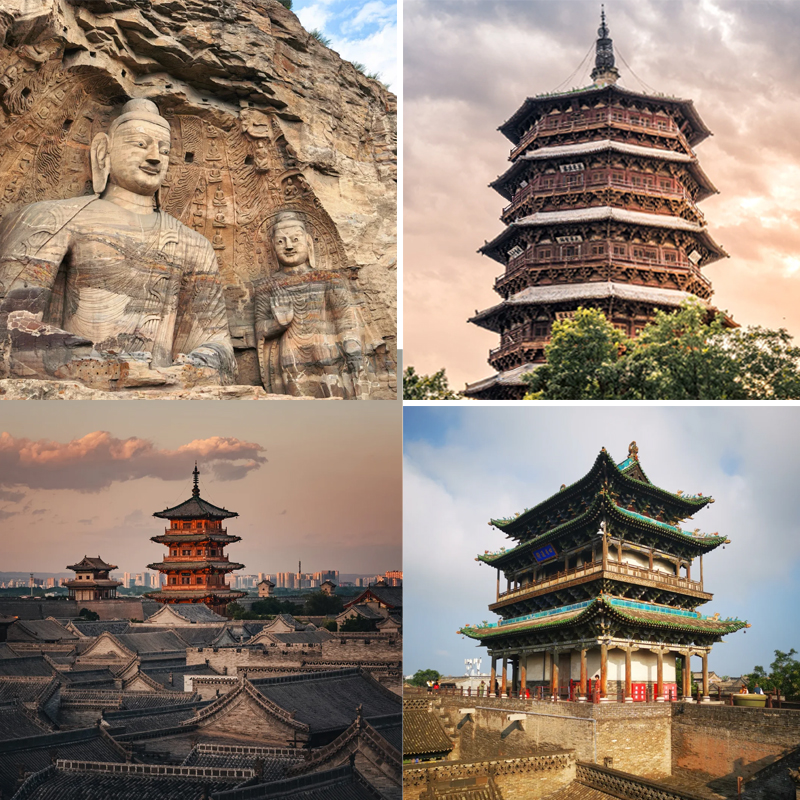
Stand before a 17-meter Northern Wei Buddha hewn from living rock, cross a trembling wooden walkway into a temple pinned to a cliff, gaze up at the world's oldest wooden pagoda — a 67-meter tower raised without a single nail — and sleep inside the walled merchant city that invented modern banking. Shanxi holds more ancient timber architecture than the rest of China combined, and this privately escorted journey follows the great north-to-south corridor through its two UNESCO World Heritage Sites, from the Buddhist caves of the Northern Wei to the lantern-lit courtyards of Ming–Qing Pingyao.
Tour Highlights
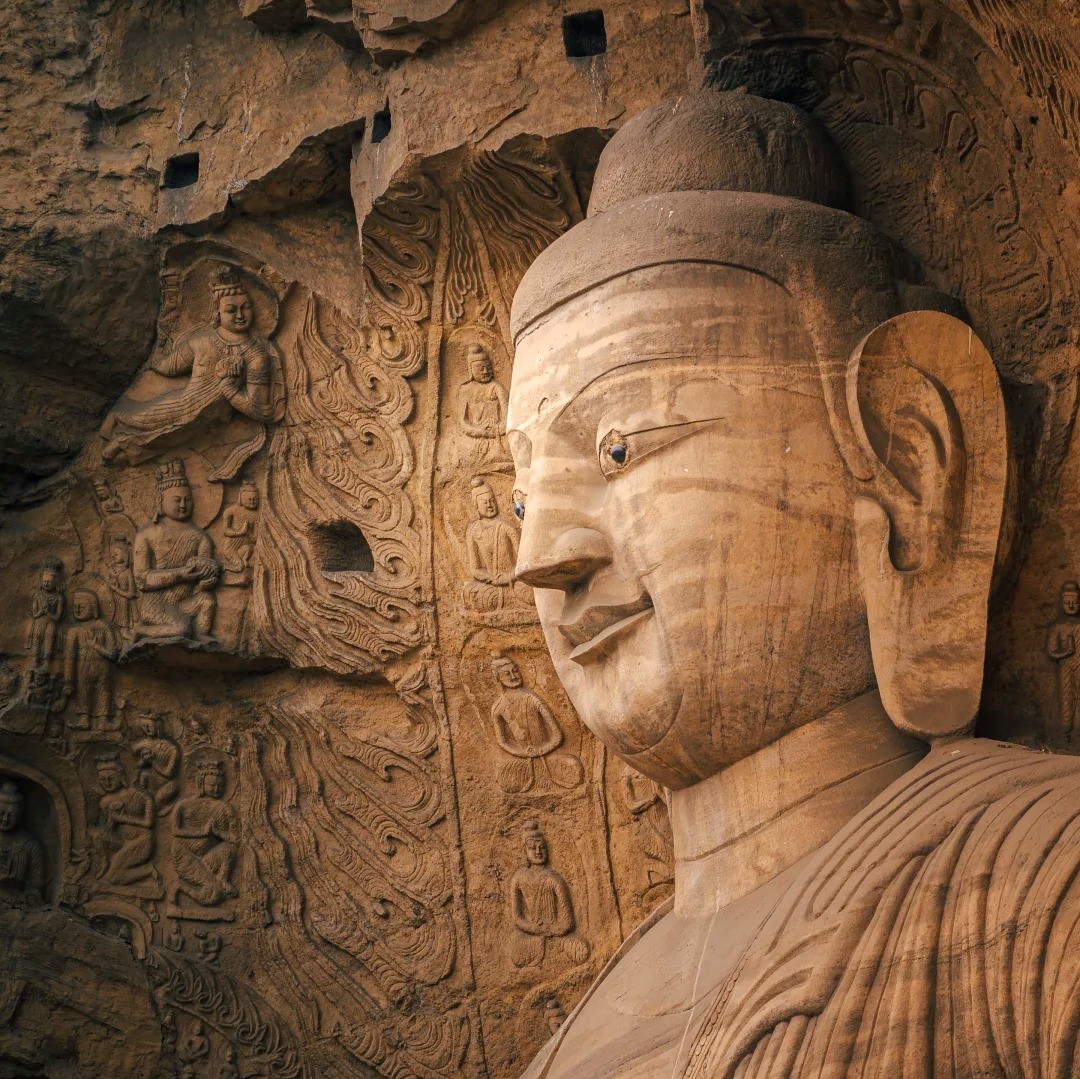
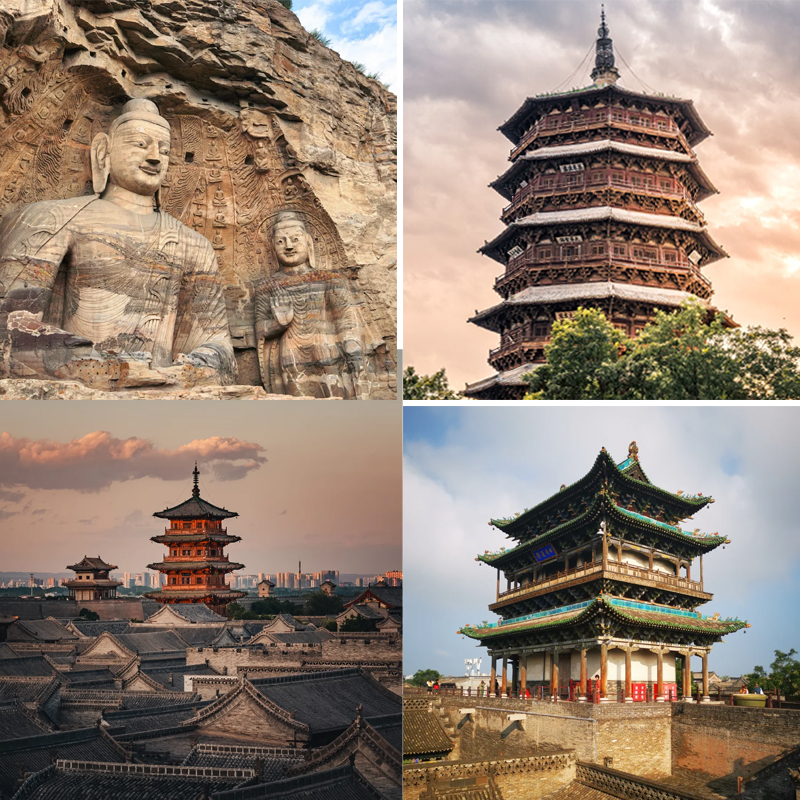
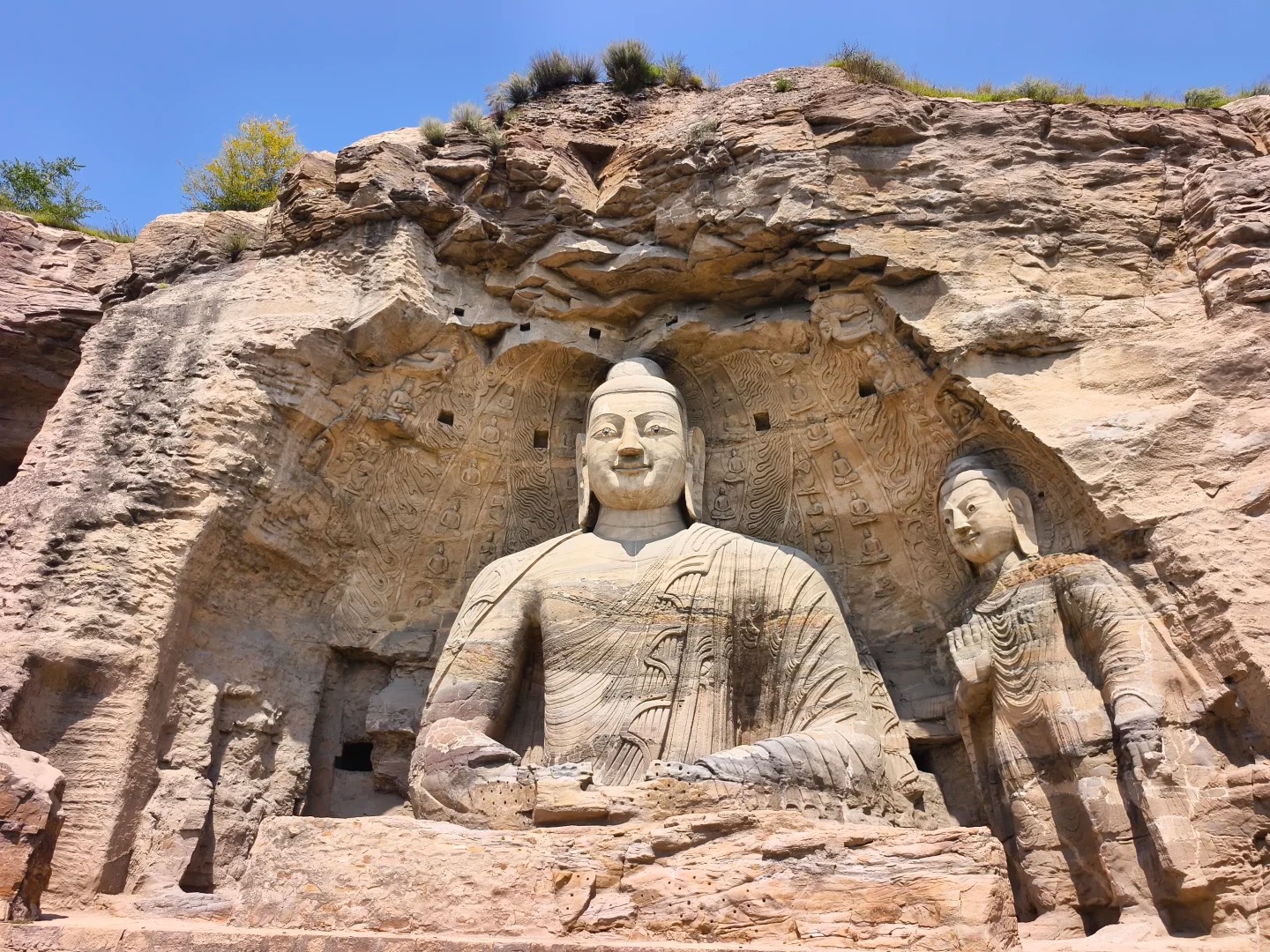
- Yungang Grottoes — A Cliff Carved with 51,000 Buddhas (UNESCO) Explore the 5th-century royal cave complex of the Northern Wei dynasty: 252 caves and over 51,000 sculptures, from the colossal open-air Buddha of Cave 20 to the floor-to-ceiling carved cosmology of Caves 5 and 6 — among the supreme achievements of Chinese Buddhist art.
- The Hanging Temple — Defying Gravity for 1,500 Years Visit the astonishing Xuankong Si, its pavilions cantilevered on wooden beams driven into a sheer cliff 60 meters above the gorge, where Buddhist, Taoist and Confucian shrines share one dizzying sanctuary.Optional cliff walk; strictly limited real-name tickets.
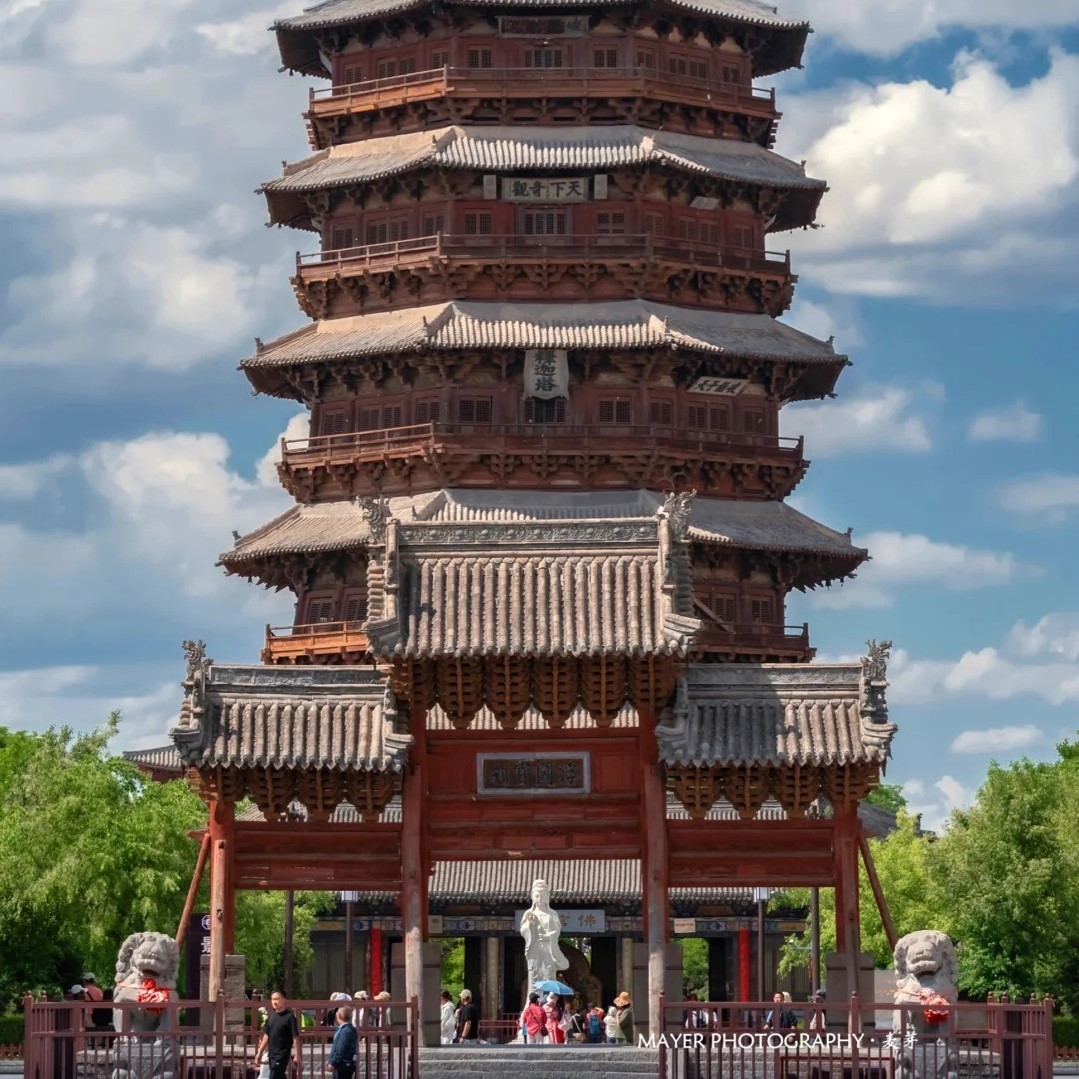
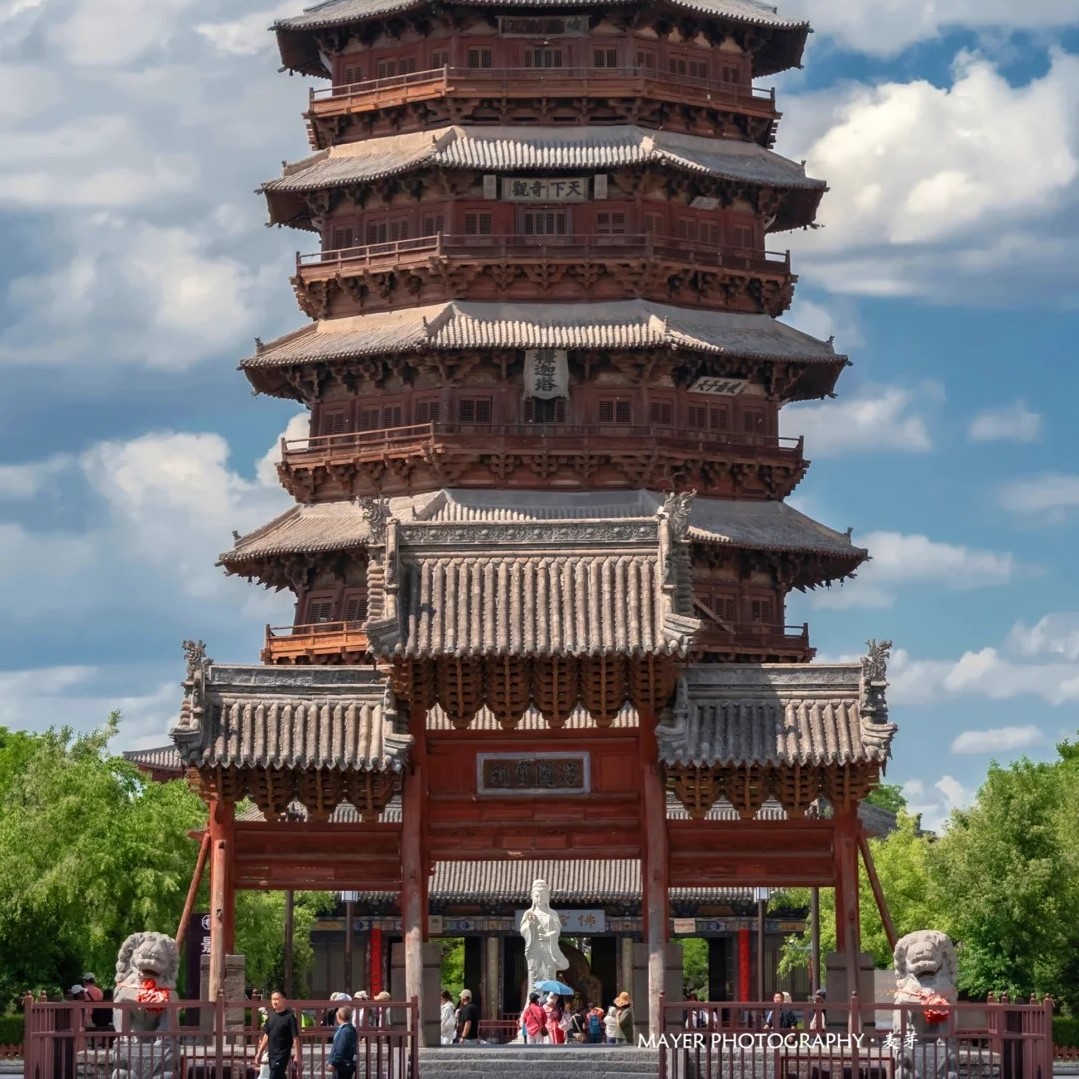
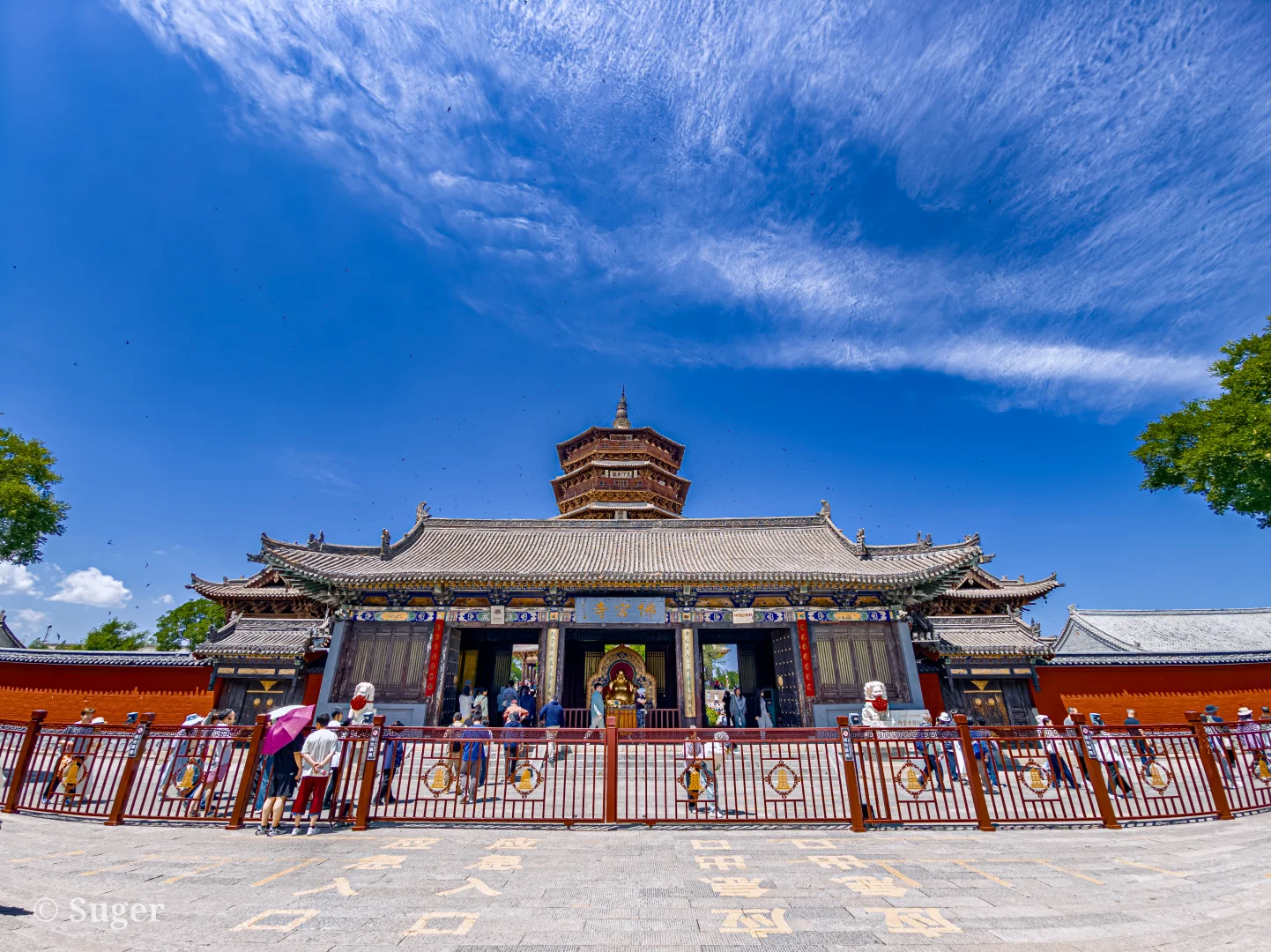
- Yingxian Wooden Pagoda — The World's Oldest Wooden Skyscraper Stand beneath the 67-meter Sakyamuni Pagoda of Fogong Temple (1056), the oldest and tallest surviving all-wood pagoda on earth — a Liao-dynasty marvel that has survived nearly a thousand years of earthquakes entirely without nails.
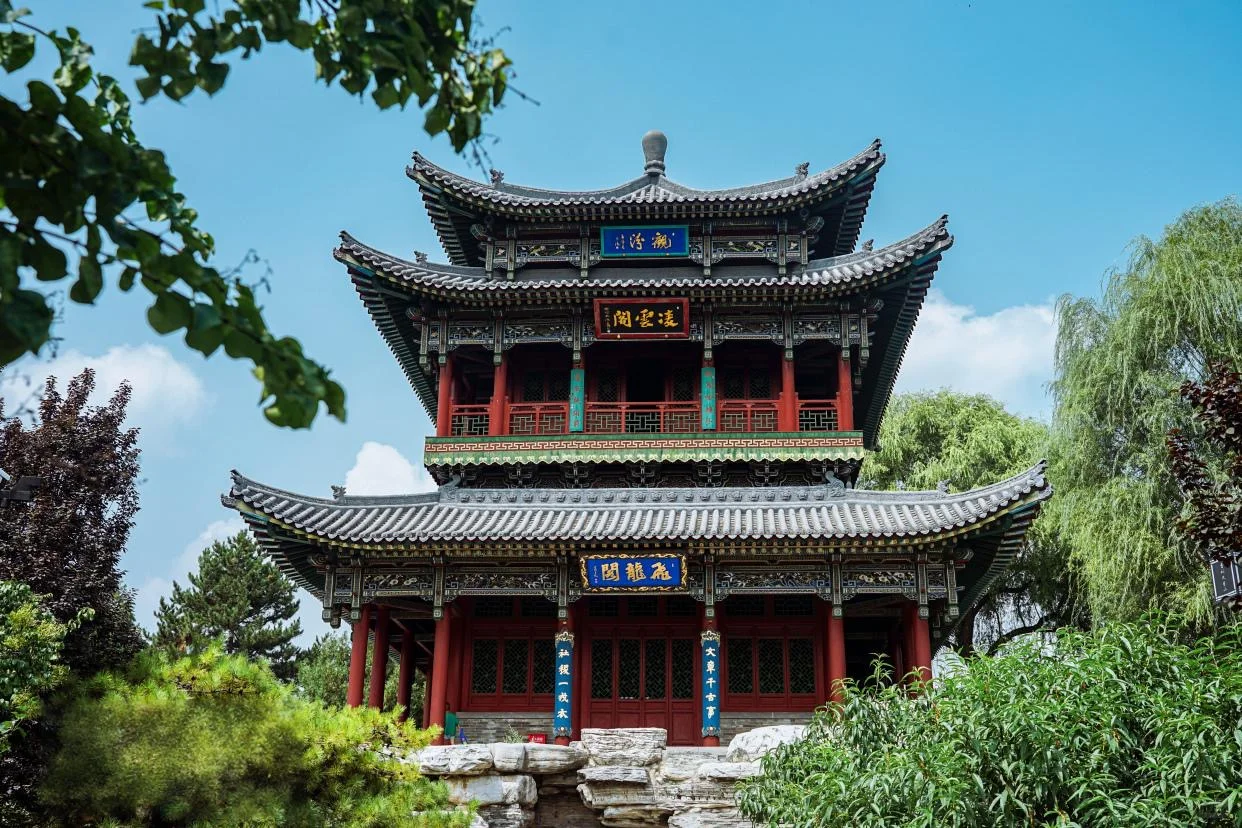
- Jinci Temple & the Shanxi Museum — Song Art and Jin Glory Wander the ancient temple complex of Jinci, with its 11th-century Hall of the Holy Mother, graceful painted clay maidens, the never-ageing Nanlao Spring and a 3,000-year-old Zhou cypress; then trace the full sweep of Shanxi civilization in one of China's finest provincial museums.
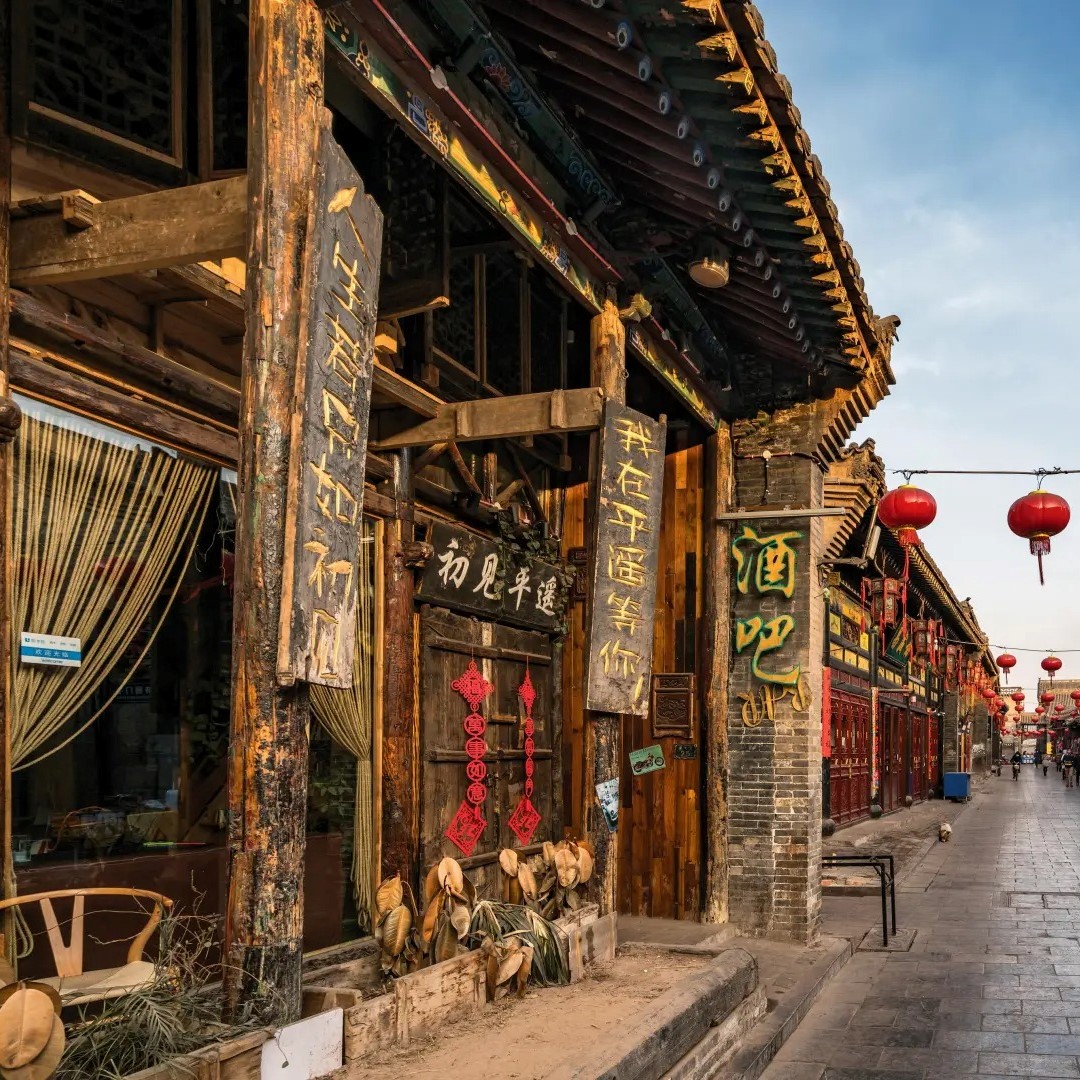
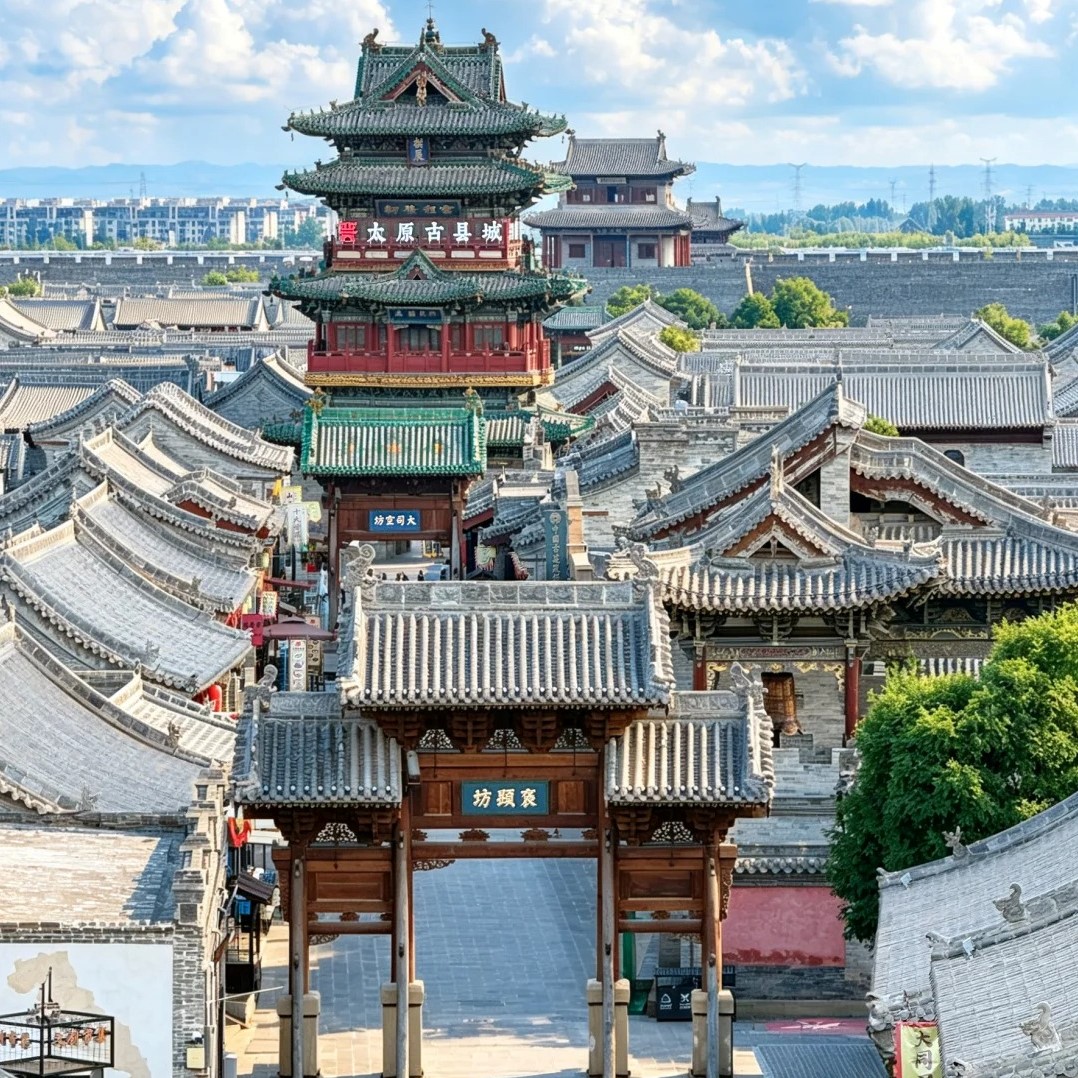
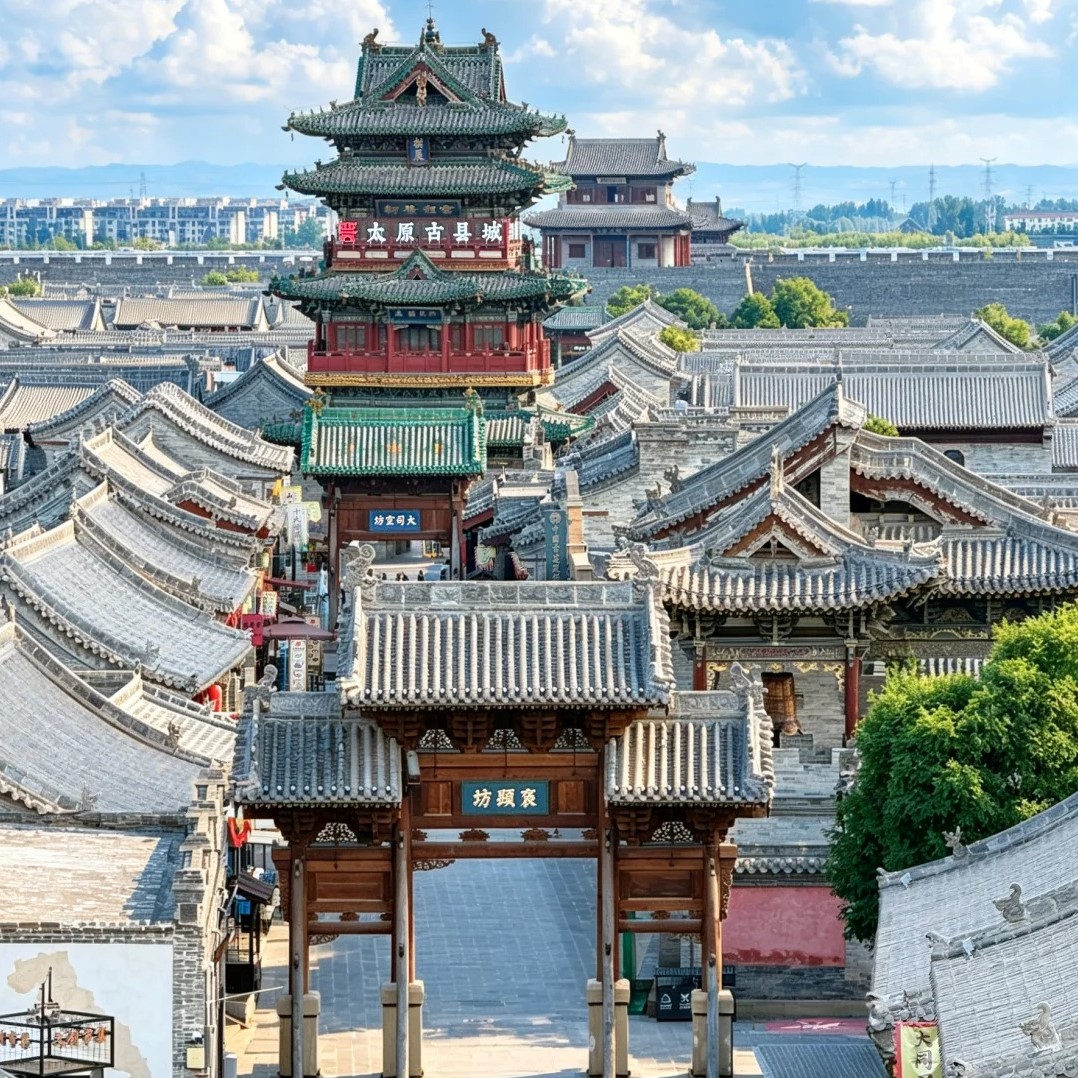
- Pingyao — The Walled City That Invented Chinese Banking (UNESCO) Stay in a Ming–Qing courtyard inn inside China's best-preserved ancient walled city. Walk the 6.4-kilometer city wall, visit Rishengchang — the 1823 "draft bank" that created China's first national financial network — and see the 2,000 painted sculptures of Shuanglin Temple.
- Exceptional Value, All-Inclusive Premium Tour Your package covers every private transfer, hand-picked 5-star and heritage courtyard hotels, an expert English-speaking guide, all entrance fees and time-slot reservations, plus daily breakfast and authentic Shanxi meals — no shopping stops, ever.
Day-by-Day Itinerary
Day 1 | Arrival in Datong · The Northern Wei Capital
- Meals: Dinner
- Overnight: Datong, 5-star hotel inside or near the ancient city
Full day: Private pickup at Datong Yungang Airport or Datong South High-Speed Railway Station and transfer to your hotel inside or near the restored ancient city.
- Afternoon: Enter the old city through its massive Ming-dynasty city wall, then visit the intimate Shanhua Monastery, one of China's most complete Liao–Jin temple complexes, and the glazed Nine-Dragon Wall.
- Evening: Walk or cycle the illuminated ramparts at sunset. Welcome dinner of Datong's famed knife-cut noodles (daoxiaomian) and a traditional copper-pot hotpot.
Day 2 | Yungang Grottoes · Huayan Monastery
- Meals: Breakfast, Lunch
- Overnight: Datong
- Morning (early): Drive to the Yungang Grottoes, a UNESCO World Heritage Site carved into Wuzhou Mountain under imperial patronage between AD 460 and 525. With your specialist guide, focus on the five imperial Tanyao caves, the open-air 13.7-meter Buddha of Cave 20 (magnificent in morning light), and the densely carved Caves 5 and 6.Allow 3–4 hours; no photography inside the caves, and a small flashlight helps in the darker niches.
- Lunch: Local farmhouse lunch near the site.
- Afternoon: Return to the city for Huayan Monastery, whose two great 11th-century Liao timber halls rank among the oldest surviving wooden halls in China, culminating in the vast seated Buddhas of the Mahavira Hall.
- Evening: Free time for Datong shaomai steamed dumplings and the old-city lanes.
Day 3 | Hanging Temple → Yingxian Wooden Pagoda → Taiyuan
- Meals: Breakfast, Lunch
- Overnight: Taiyuan, 5-star hotel
- Morning: Drive southeast to Hunyuan beneath Mount Heng. Approx. 1.5 hours. Visit the Hanging Temple (Xuankong Si), a 6th-century complex cantilevered 60 meters up a near-vertical cliff, its halls shared by Buddhism, Taoism and Confucianism. The cliffside walk is optional and ticketed; even from the viewing terrace the structure is breathtaking.
- Lunch: Hunyuan cold noodles and northern Shanxi country dishes.
- Early afternoon: Continue to Yingxian. Approx. 1 hour. See the Sakyamuni Pagoda of Fogong Temple (Yingxian Wooden Pagoda), built in 1056 — 67 meters of pure timber, five visible stories over nine interior levels, held together for a millennium by its ingenious dougong bracket system.To protect the structure, visitors admire it from outside and the ground floor; the upper levels are not open.
- Late afternoon: Drive south across the Shanxi plateau to Taiyuan. Approx. 2.5 hours, with a rest stop en route.
Day 4 | Jinci Temple & the Shanxi Museum
- Meals: Breakfast, Lunch
- Overnight: Taiyuan
- Morning: Drive to Jinci Temple at the foot of Mount Xuanweng. Approx. 40 minutes. Explore the sacred spring-side complex: the Northern Song Hall of the Holy Mother (1023–1032) with its famous 43 life-sized painted clay maidens, the fish-and-marsh flying bridge over the eternal Nanlao Spring, the Offering Hall, and a gnarled Zhou cypress planted roughly 3,000 years ago.
- Lunch: Taiyuan noodles and steamed dumplings at a local old restaurant.
- Afternoon: Visit the Shanxi Museum (free, advance reservation included; closed Mondays — your guide adjusts the order if needed), rich in Northern Wei Buddhist sculpture, ancient bronzes, Jin merchant heritage and Liao–Jin architecture models that tie the whole journey together.
- Evening: Stroll the Zhonglou Street and Food Street night markets.
Day 5 | Taiyuan → Pingyao · Shuanglin Temple & the Lantern City
- Meals: Breakfast, Lunch, Dinner
- Overnight: Pingyao Ancient City, heritage courtyard inn
- Morning: Take the short high-speed train to Pingyao. Approx. 30 minutes; a private car of about 1.5 hours is an alternative. Stop first at Shuanglin Temple, 6 km outside the city, whose ten halls hold more than 2,000 vivid Song-to-Ming painted clay sculptures — the "treasure house of oriental colored sculpture," and part of the UNESCO Pingyao property.
- Afternoon: Enter Pingyao Ancient City, a UNESCO World Heritage Site, and check in to a carefully converted Ming–Qing courtyard inn. Walk the 6.4-kilometer city wall (begun 1370), then descend to the Rishengchang Exchange Shop, founded in 1823 as the birthplace of China's modern banking system, and the old County Government Office.
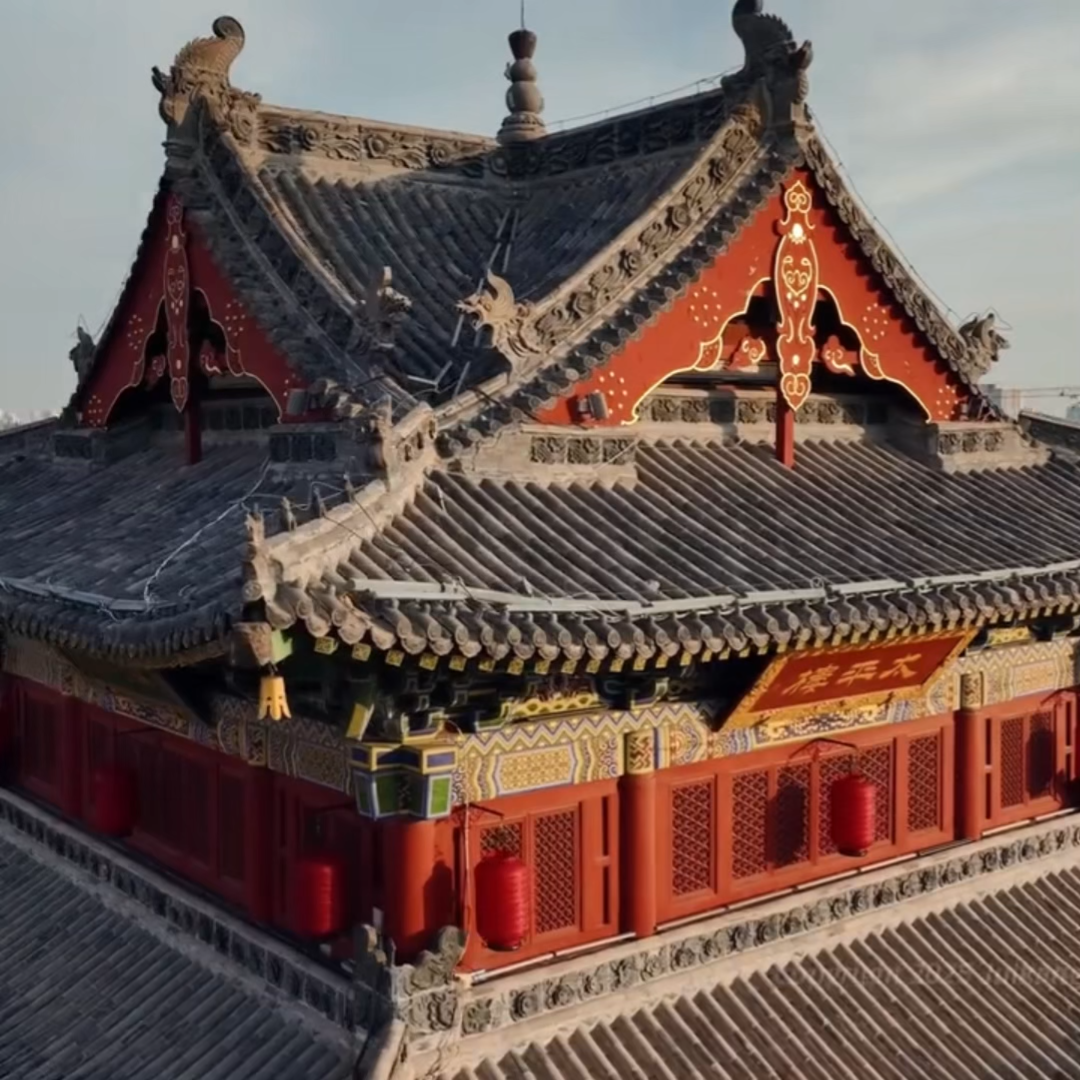
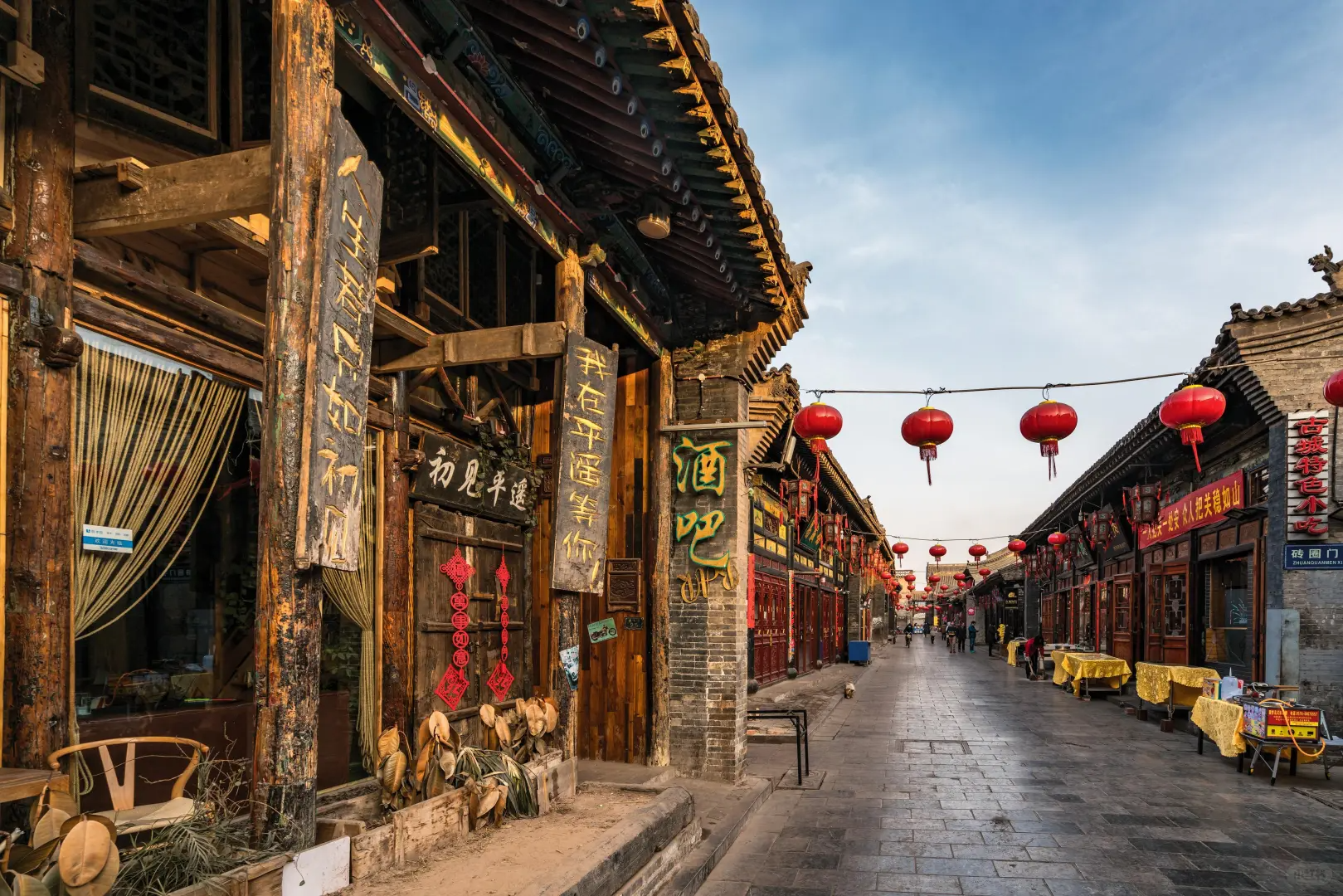
- Evening: Wander the lantern-lit Ming–Qing Street as red lanterns glow beneath the tiled eaves. Dinner of Pingyao beef, vinegar-braised dishes and handmade noodles.
Day 6 | Pingyao Morning & Departure
- Meals: Breakfast
- Early morning: Walk the quiet lanes and the wall before the day visitors arrive — the old city at its most timeless. Optionally add Zhenguo Temple, whose 10th-century Ten-Thousand-Buddha Hall is the oldest timber building in the Pingyao property.
- Late morning: Last visit to the Confucian Temple and City God Temple, with time for souvenirs of aged Shanxi vinegar and hand-pulled lacquerware.
- Afternoon: Private transfer to Taiyuan Wusu International Airport (about 1.5 hours) or Pingyao's high-speed station (about 30 minutes to Taiyuan South) for your onward journey.We recommend a flight after 15:00; please share your departure details when booking.
From a Northern Wei Buddha's serene gaze to a wooden tower that has outlived empires and the lanterns of China's greatest merchant city, this is Shanxi as a living museum — where every step crosses a thousand years.
What's Included
- Private air-conditioned vehicle with an experienced driver throughout, including the Datong–Hunyuan–Yingxian–Taiyuan road day and all arrival/departure transfers
- One Taiyuan–Pingyao high-speed train in second class (first class available on request), with private station transfers
- Dedicated English-speaking guide for the full journey, with specialist on-site guidance at the Yungang Grottoes
- 5 nights' accommodation: 2 nights at a 5-star Datong hotel, 2 nights at a 5-star Taiyuan hotel, and 1 night in a heritage Ming–Qing courtyard inn inside Pingyao Ancient City (daily breakfast included)
- All entrance tickets and reservations: Yungang Grottoes, Huayan and Shanhua monasteries, the Hanging Temple (entrance), Yingxian Wooden Pagoda, Jinci Temple, Shanxi Museum reservation, Shuanglin Temple and the 3-day Pingyao all-inclusive old-city pass
- Selected meals: 5 breakfasts, 5 lunches and 2 dinners, featuring Datong knife-cut noodles and shaomai, Taiyuan noodle dishes, and Pingyao beef and vinegar cuisine
- Bottled water in the vehicle and 24/7 on-trip assistance
- No shopping stops — a pure, privately escorted architecture and heritage experience
What to Know
- Route & pacing: This is a one-way north-to-south journey — arrive in Datong and depart from Taiyuan, with no backtracking. Day 3 is the main road day: roughly 5 hours of driving split into three comfortable legs, broken up by two major visits and lunch. We can add a night en route for a more relaxed pace.
- Two UNESCO sites: the Yungang Grottoes (2001) and Ancient City of Pingyao (1997), the latter comprising the old city plus Shuanglin Temple and Zhenguo Temple. The Hanging Temple, Yingxian Wooden Pagoda, Jinci Temple and the Datong Liao monasteries are supreme national heritage monuments but are not themselves UNESCO-listed.
- Hanging Temple climbing tickets: From April 1, 2026, cliff-walk tickets are strictly capped at 2,475 per day and declining each year to protect the timber structure. They are real-name, bookable up to 7 days ahead, and require both an entrance ticket and a separate climbing ticket. We reserve the moment sales open; if the walk is sold out or you prefer not to climb, the classic ground viewing terrace offers the iconic full view with no height exposure. The cliff walk is not advised for guests over 70, over 100 kg, or with heart, blood-pressure or respiratory conditions.
- Yingxian Wooden Pagoda: As a protected structure, the upper floors are closed to the public; the visit is the exterior and ground-floor Buddha, which is exactly how the great pagoda is best and most safely appreciated.
- Museum closures: The Shanxi Museum is free but requires real-name advance reservation and is closed on Mondays (except public holidays). We schedule around the day of the week using your passport details — carry your passport every day — and can swap Day 4 with city or old-town sightseeing if your dates fall on a Monday.
- Best seasons: May–June and September–October are ideal — clear, cool and best for photography on the open cave terraces and ancient walls. Summers are warm; winters are cold and dry with fewer visitors. The plateau has bright sun and cool evenings year-round, so bring layers and sun protection.
- Walking level: Moderate. Expect extensive walking and many steps at the grottoes, the Hanging Temple cliff walk (optional), Jinci and the Pingyao lanes and wall. The Pingyao old city is best explored on foot over uneven, centuries-old flagstones; comfortable non-slip shoes are essential, and porters can be arranged for luggage.
- Food: Shanxi cuisine is the wheat-and-vinegar heartland of China — hand-cut noodles, shaomai dumplings, Pingyao braised beef and aged grain vinegar — savory rather than fiery, with spice on the side. Vegetarian options are readily available; please advise dietary needs in advance.
- Courtyard stay: The Pingyao inn is a characterful historic courtyard building with stone thresholds, wooden stairs and occasional evening music from nearby lanes; we select quieter locations, but rooms differ from modern chain hotels.
- Connecting onward: Taiyuan is the regional air and high-speed rail hub. We're glad to extend to Mount Wutai, the Wang Family Courtyard, the Hukou Waterfall, or connect west to Xi'an.