9-Day Ancient China in Stone, Wood & Clay: Datong, the Western Qing Tombs, Taiyuan, Xiaoxitian & Pingyao
Designed for American Travelers · 5-Star City Hotels & Heritage Courtyard Stays · Meals Included · Private Transportation · Dedicated English-Speaking Guide
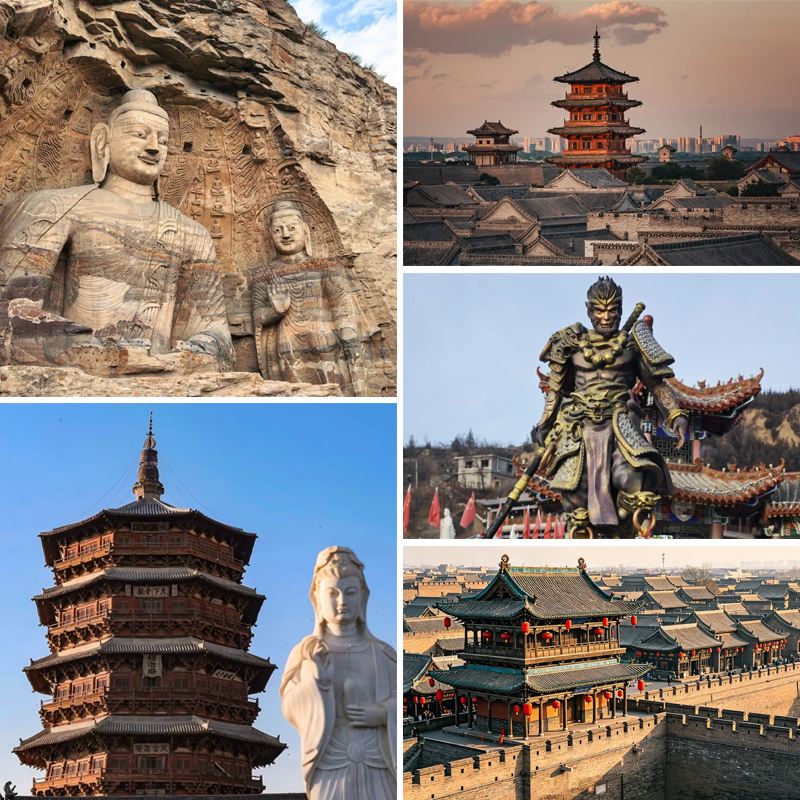
This is the deep-dive China that architecture and art lovers dream about. Stand beneath the 1,500-year-old Buddhist cliffs of Yungang, visit a temple hanging off a mountain face, walk the quiet imperial tombs of Qing emperors in the hills west of Beijing, trace Song dynasty masterpieces in Taiyuan, and finish in the perfectly preserved merchant city of Pingyao — with a pilgrimage to the hidden mountain hall of Xiaoxitian, whose nearly 2,000 floating clay sculptures became a global sensation through the video game Black Myth: Wukong. Four UNESCO World Heritage listings, one unforgettable private journey.
Tour Highlights
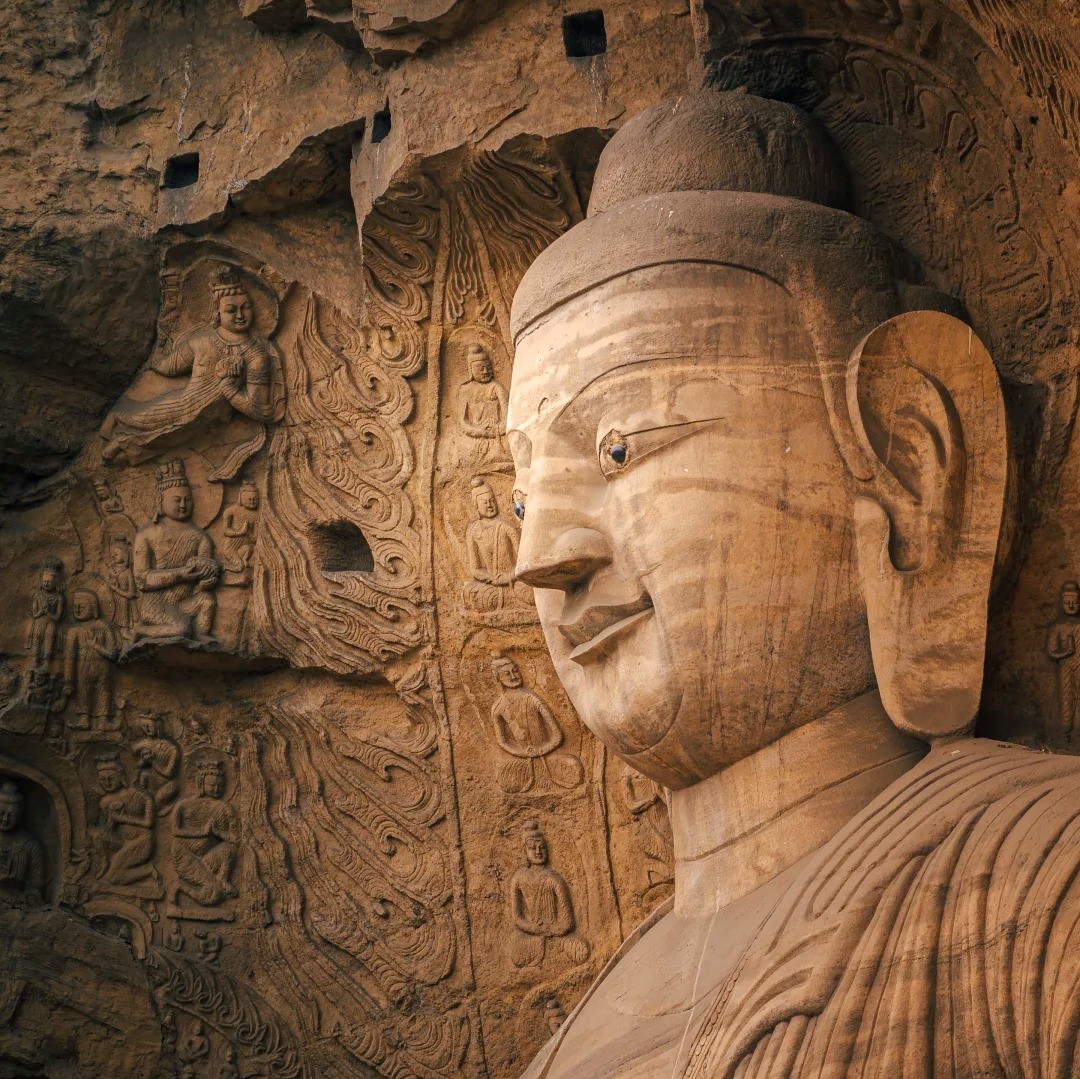
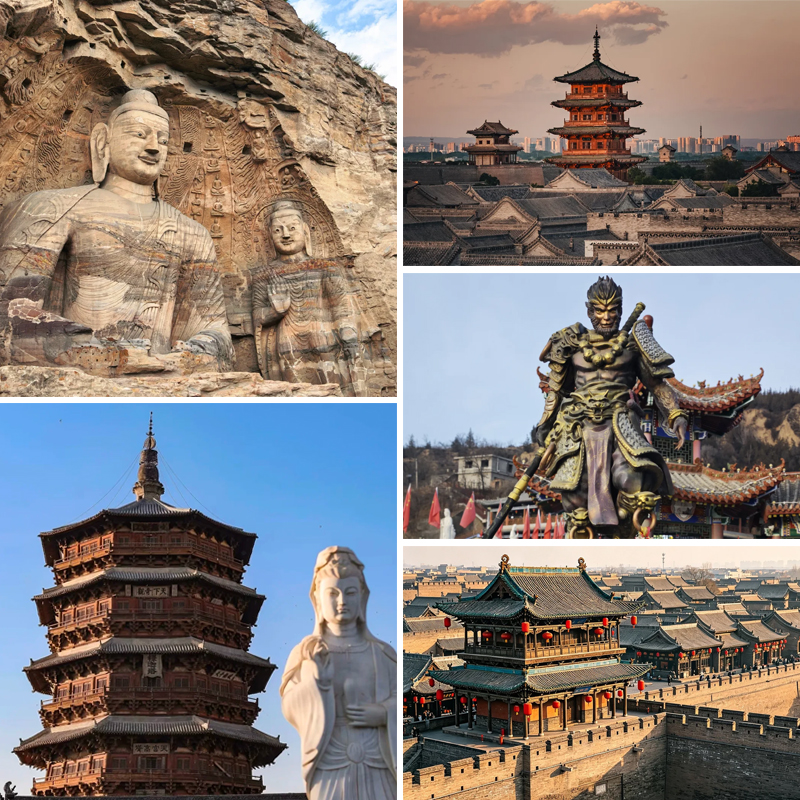
- Yungang Grottoes — A UNESCO Buddhist Masterpiece In 252 caves carved in the 5th century, over 51,000 statues range from tiny seated Buddhas to a 17-meter colossus — one of the three great cave-temple ensembles of China and a defining monument of Northern Wei Buddhist art.
- The Hanging Temple & the Edge of the Northern Frontier Visit Xuankong Temple, clinging impossibly to a sheer cliff for over 1,500 years with Buddhist, Taoist and Confucian halls suspended on wooden beams — one of the most gravity-defying buildings on Earth.
- The Western Qing Tombs — Imperial Mausolea in the Hills A UNESCO World Heritage Site in the forested Yixian hills west of Beijing, where emperors Yongzheng, Daoguang and Guangxu and their empresses lie in grand, rarely crowded stone mausolea along spirit ways lined with guardian figures.
- Taiyuan — Jinci Temple & the Treasures of Shanxi Museum Explore Jinci, an exquisite Song dynasty temple-and-spring complex with painted hall sculptures and ancient cypresses, and the Shanxi Museum's bronzes, Buddhist art and relics of the Jin merchant empire.
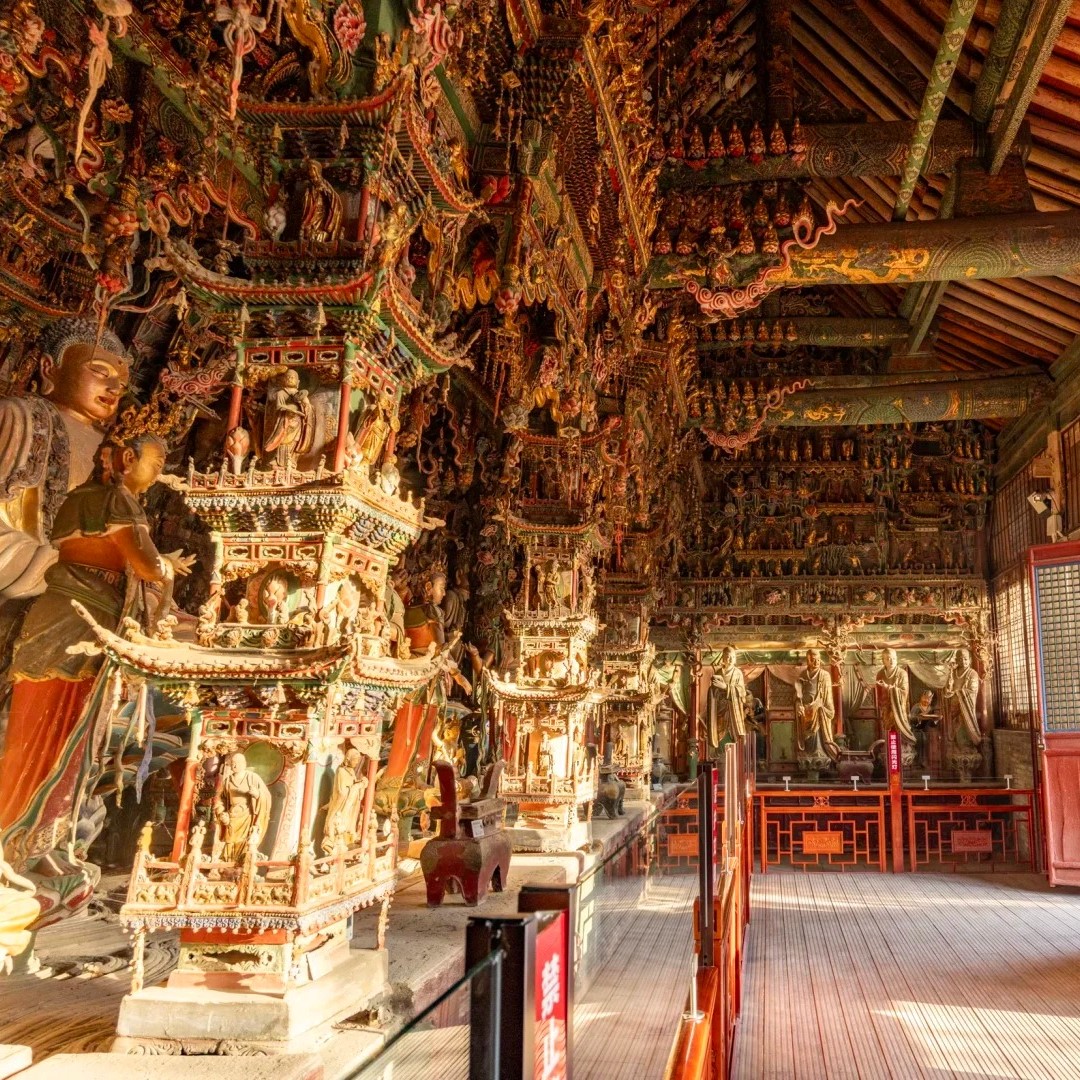
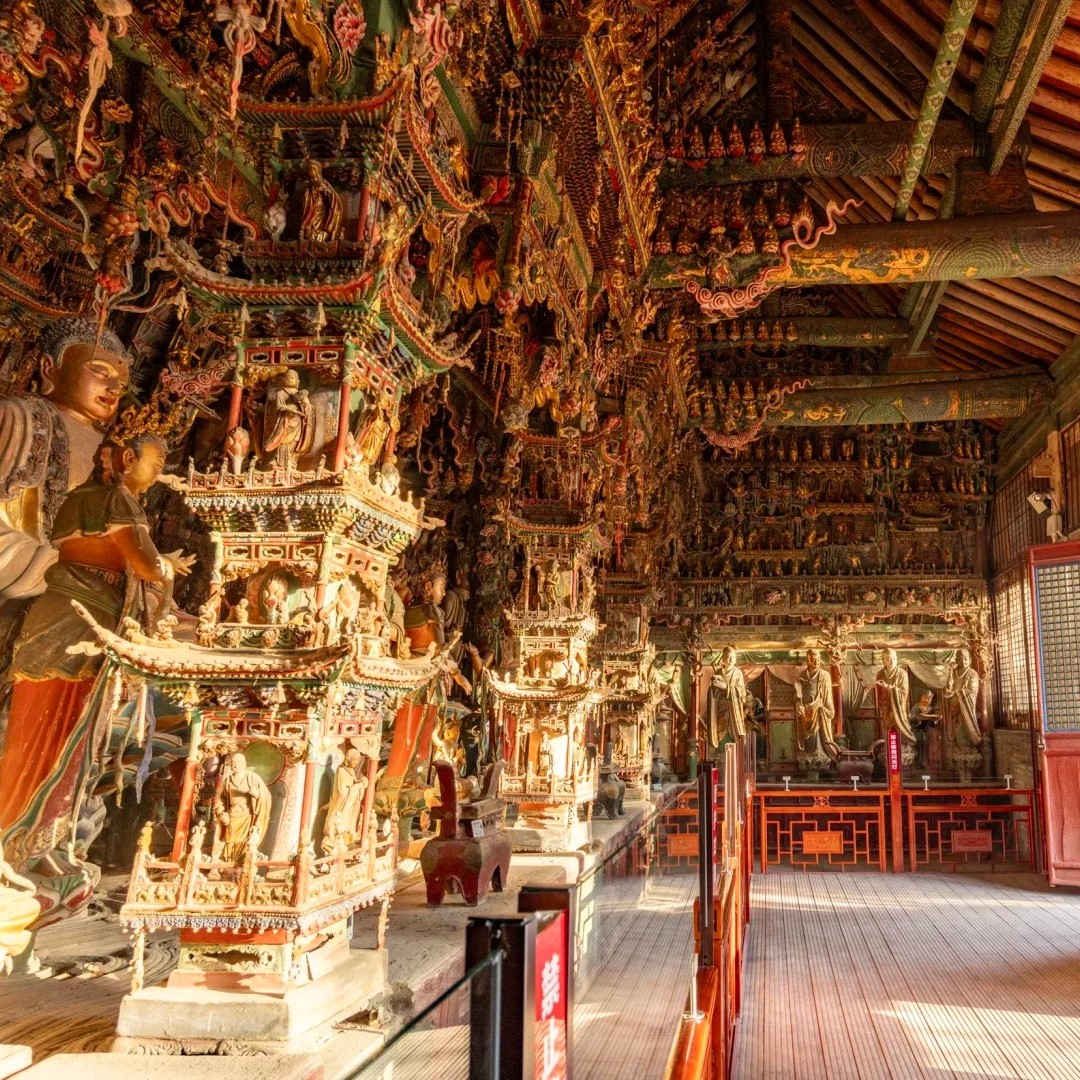
- Xiaoxitian — The "Suspended Sculpture" Miracle Make the pilgrimage to a small 1629 Ming nunnery in the remote Xixian hills. In a single 170-square-meter hall, 1,978 gilded clay figures float across walls and ceiling — tiered palaces, flying apsaras, musicians and playful young monks — hailed as the supreme masterpiece of Chinese suspended sculpture, immortalized in Black Myth: Wukong.
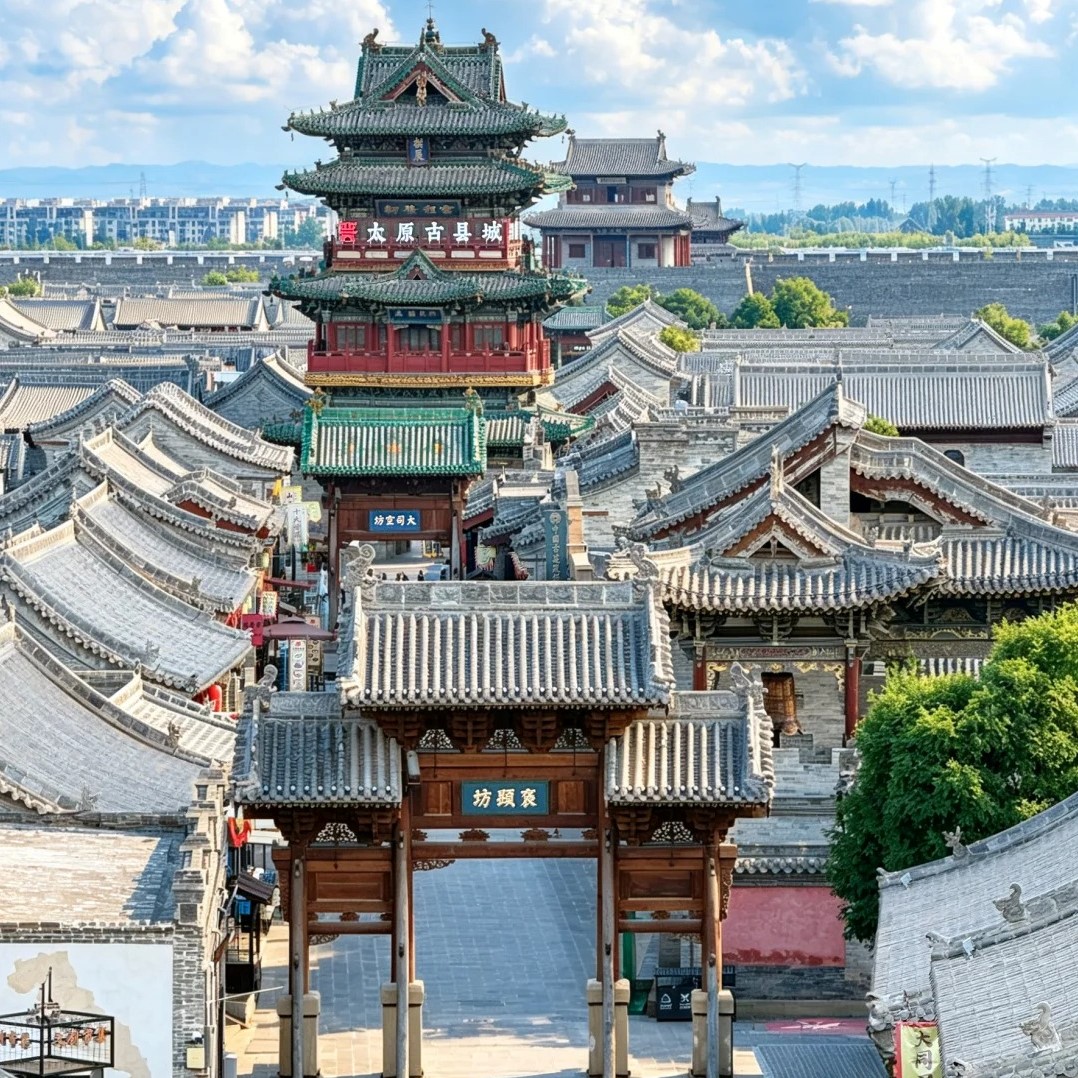
- Pingyao — The Walled Merchant City Sleep inside a Ming-and-Qing courtyard mansion in UNESCO-listed Pingyao, walk its six kilometers of city wall, visit China's first draft bank, and admire the painted sculpture treasury of Shuanglin Temple — the best-preserved medieval trading city in China, lantern-lit by night.
- Exceptional Value, All-Inclusive Premium Tour Your package covers all private long-distance ground transportation, hand-selected hotels and heritage courtyard inns, an expert English-speaking guide with specialist escorts at the caves and sculpture halls, every entrance ticket and in-park shuttle, plus daily breakfast and selected local meals — no shopping stops, ever.
Day-by-Day Itinerary
Day 1 | Arrival in Datong · The Northern Wei Capital
- Meals: Dinner
- Overnight: Datong, 5-star hotel
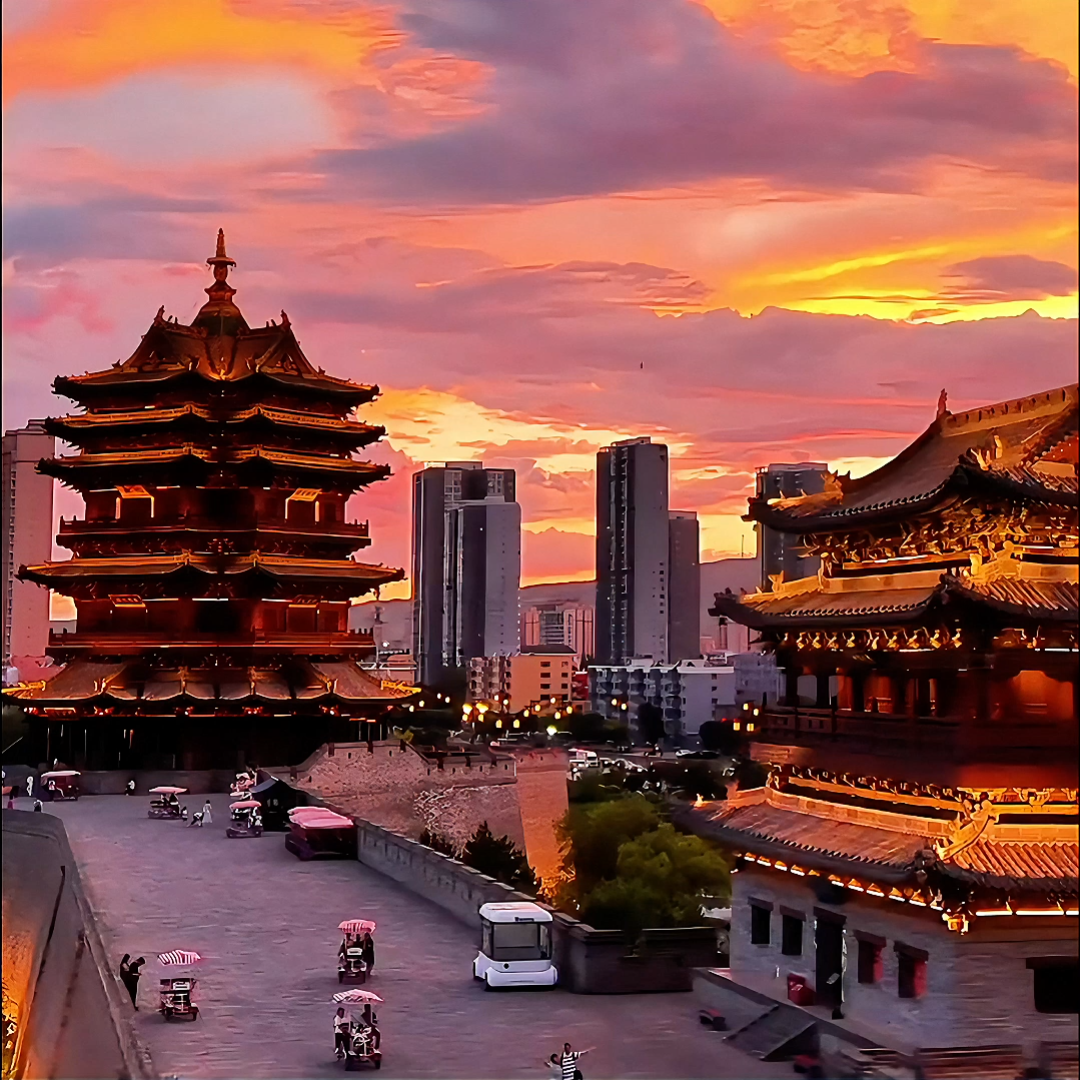
Full day: Private pickup at Datong Yungang Airport or Datong South Railway Station and transfer to your hotel. Capital of the Northern Wei dynasty 1,600 years ago and today the gateway to China's greatest Buddhist cave art, Datong is a relaxed city newly ringed by a restored ancient wall.
- Evening: Stroll the lantern-lit Datong Ancient City, see the exterior of Huayan Temple and the historic Nine-Dragon Screen, and walk or cycle along the illuminated ramparts at sunset. Welcome dinner of hearty northern Shanxi fare — knife-shaved noodles (daoxiao mian) and copper-pot hot pot.
Day 2 | The Yungang Grottoes
- Meals: Breakfast, Lunch
- Overnight: Datong
- Morning: Visit the Yungang Grottoes, a UNESCO World Heritage Site begun in AD 460. With your specialist guide, walk the cliff face cave by cave: the monumental early imperial caves with their vast seated Buddhas, the exquisitely decorated "music cave" with celestial musicians, and thousands of smaller figures — a fusion of Indian, Central Asian and Chinese art.Advance real-name reservation included; carry your passport.
- Lunch: Local lunch near the site.
- Afternoon: Return to the city to visit Shanhua Temple, one of China's most complete surviving Jin and Liao dynasty temple complexes, and the halls of Huayan Temple, whose grand timber hall houses monumental Liao statues.
- Evening: Free time inside the old city walls.
Day 3 | Datong → The Hanging Temple → Yixian
- Meals: Breakfast, Lunch, Dinner
- Overnight: Yixian, best-available comfort/boutique hotel
- Morning: Drive south through the Hengshan range to Xuankong Temple (the Hanging Temple). Approx. 1.5 hours. Built into a vertical cliff more than 50 meters above the ground, this 6th-century complex links more than 40 Buddhist, Taoist and Confucian halls by narrow walkways and cantilevered beams. Cross the cliffside galleries (height permitting) and watch the wooden structure seemingly float in space.
- Lunch: Simple country lunch at the foot of the mountain.
- Afternoon: Continue southeast across the mountain pass into Hebei Province and on to Yixian, the county of the Western Qing Tombs. Approx. 3–3.5 hours from the Hanging Temple via Lingqiu, with comfort stops.
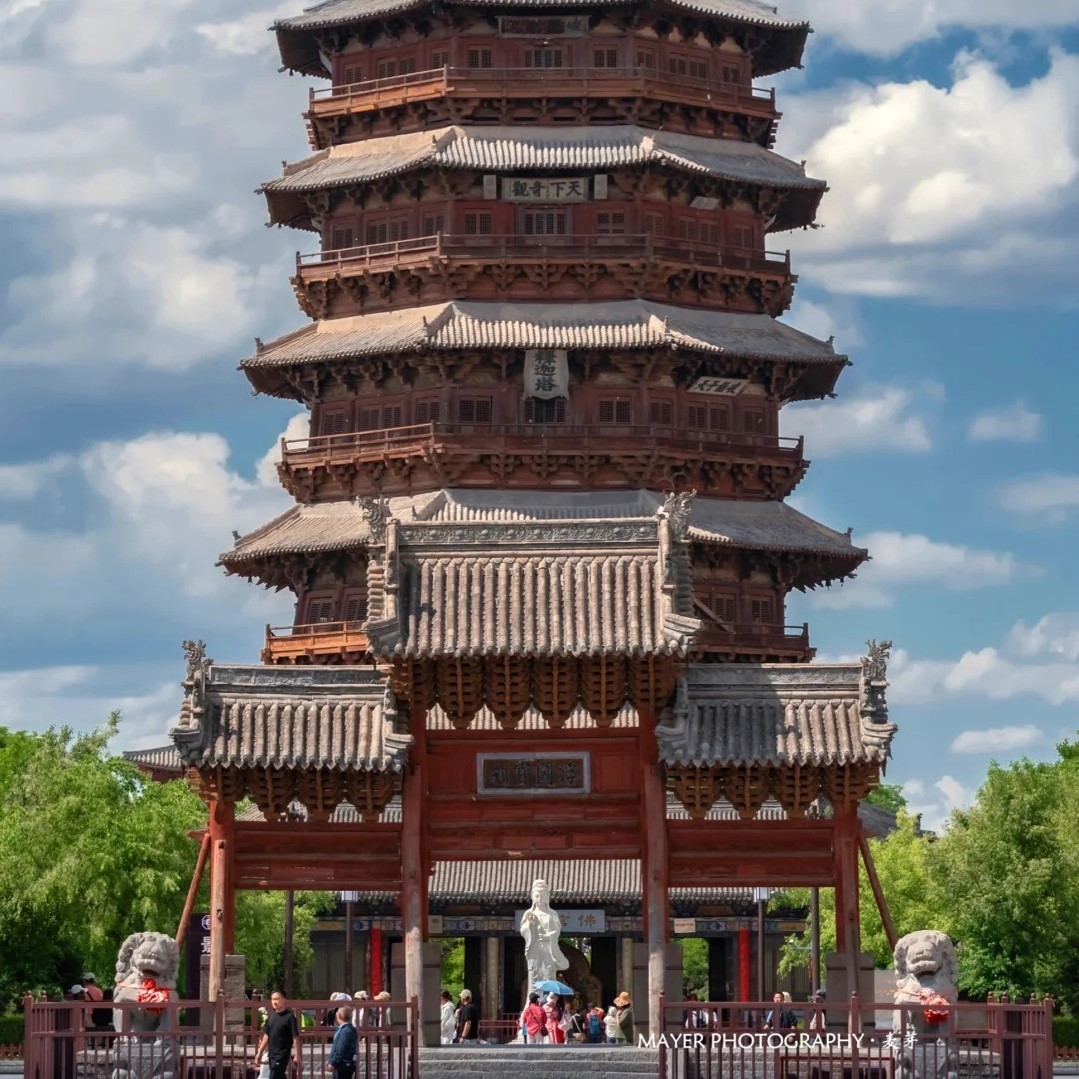
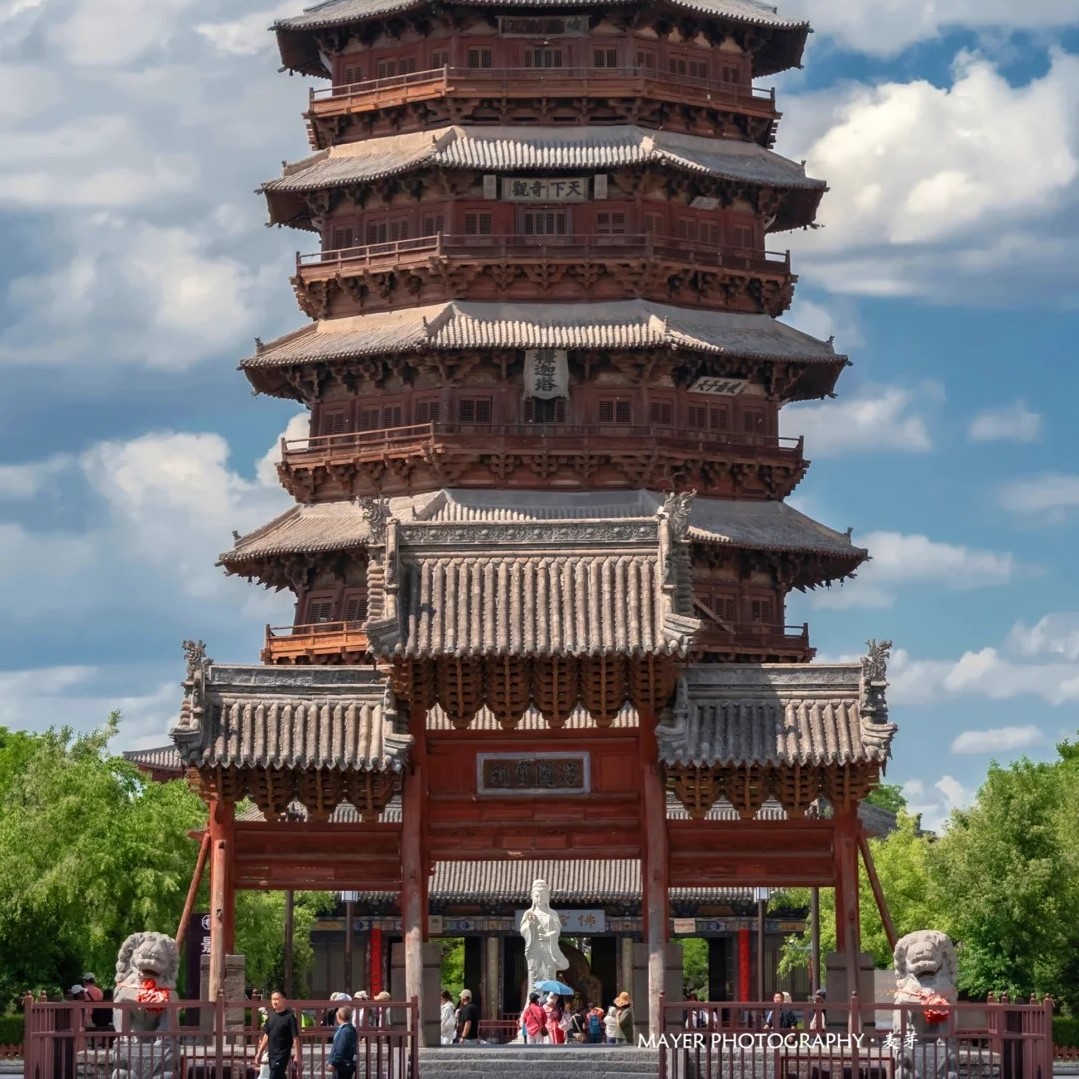
- Evening: Check in and rest; dinner at the hotel.The 11th-century Yingxian Wooden Pagoda, the world's oldest and tallest all-wooden pagoda, lies a detour to the west and can be added as an extra half-day.
Day 4 | The Western Qing Tombs → Taiyuan
- Meals: Breakfast, Lunch
- Overnight: Taiyuan, 5-star hotel
- Morning: Explore the Western Qing Tombs (Qing Xi Ling), a UNESCO World Heritage Site set among pine-covered hills. Walk the spirit way and visit Tailing, the grand mausoleum of the Yongzheng Emperor, with its dragon-phoenix gates, stone courtyards and burial mound — far quieter and more atmospheric than the Ming Tombs near Beijing. Your guide explains Qing imperial funerary architecture and ritual.
- Lunch: Local farm cooking in the village below the tombs.
- Afternoon: A longer transfer southwest across the Taihang Mountains to Taiyuan, the Shanxi provincial capital. Approx. 400 km / 5 hours with breaks — a scenic mountain-and-plain drive; bottled water and comfort stops provided.
- Evening: Arrive and check in; dinner at leisure.
Day 5 | Taiyuan · Jinci Temple & Shanxi Museum
- Meals: Breakfast, Lunch
- Overnight: Taiyuan
- Morning: Drive to Jinci Temple at the foot of Xuanweng Mountain. About 40 minutes. Built around the sacred Nanlao Spring and founded over 1,400 years ago, this masterpiece of early Song architecture centers on the Hall of the Holy Mother (1023–1032 AD) with its celebrated clay maidservant sculptures, surrounded by 3,000-year-old Zhou cypresses, flying bridges over a fishpond and serene pavilions.
- Lunch: Taiyuan noodles and aged-vinegar dishes.
- Afternoon: Visit the Shanxi Museum (closed most Mondays; reservations arranged), rich in Bronze Age ritual vessels, Northern dynasty Buddhist statuary, tomb murals and exhibits on the Shanxi merchants who built Pingyao's wealth.
- Evening: Optional walk along the renovated Taiyuan Ancient County Seat or the Fen River promenade.
Day 6 | Taiyuan → Xixian · Pilgrimage to Xiaoxitian
- Meals: Breakfast, Lunch, Dinner
- Overnight: Xixian County, best-available comfort hotel
- Morning: Drive south through the Lüliang hills and Loess Plateau gorges toward Xixian County in southern Shanxi. Approx. 295 km / 4 hours via expressway; Xixian has no railway, so private driving is the practical way in.
- Lunch: Simple lunch on arrival in the small county town.
- Afternoon: Visit Xiaoxitian ("Little Western Heaven"), officially the Thousand-Buddha Nunnery, founded in 1629 on the ridge of Fenghuang Mountain. Climb through the mountain gateways to the Mahavira Hall, where nearly 2,000 gilded suspended clay sculptures (xunsu) fill just 170 square meters — five Buddhas on lotus thrones, tiered heavenly palaces, flying apsaras with instruments, and famously lifelike young novice monks. Crafted to tilt outward and shed dust, they have remained dazzling and nearly dust-free for almost 400 years.Real-name, time-slot reservation essential; the hall is unlit to protect the pigments, so we time the visit for good afternoon light, generally before 16:30.
- Evening: Overnight in Xixian; dinner of rustic Shanxi mountain cooking.
Day 7 | Xixian → Shuanglin Temple → Pingyao
- Meals: Breakfast, Lunch, Dinner
- Overnight: Pingyao, heritage courtyard boutique inn
- Morning: Drive northeast back across the province toward the Fen River valley. Approx. 3–3.5 hours.
- Lunch: En route.
- Afternoon: Arrive at Pingyao and stop first at Shuanglin Temple, part of the UNESCO Ancient City of Ping Yao property. A Buddhist temple founded in the 6th century and rebuilt in the Ming, it safeguards more than 2,000 vivid painted sculptures — fierce guardian warriors, expressive arhats and a thousand-armed Guanyin — earning it the name "treasure house of oriental painted sculpture," a magnificent companion to Xiaoxitian.
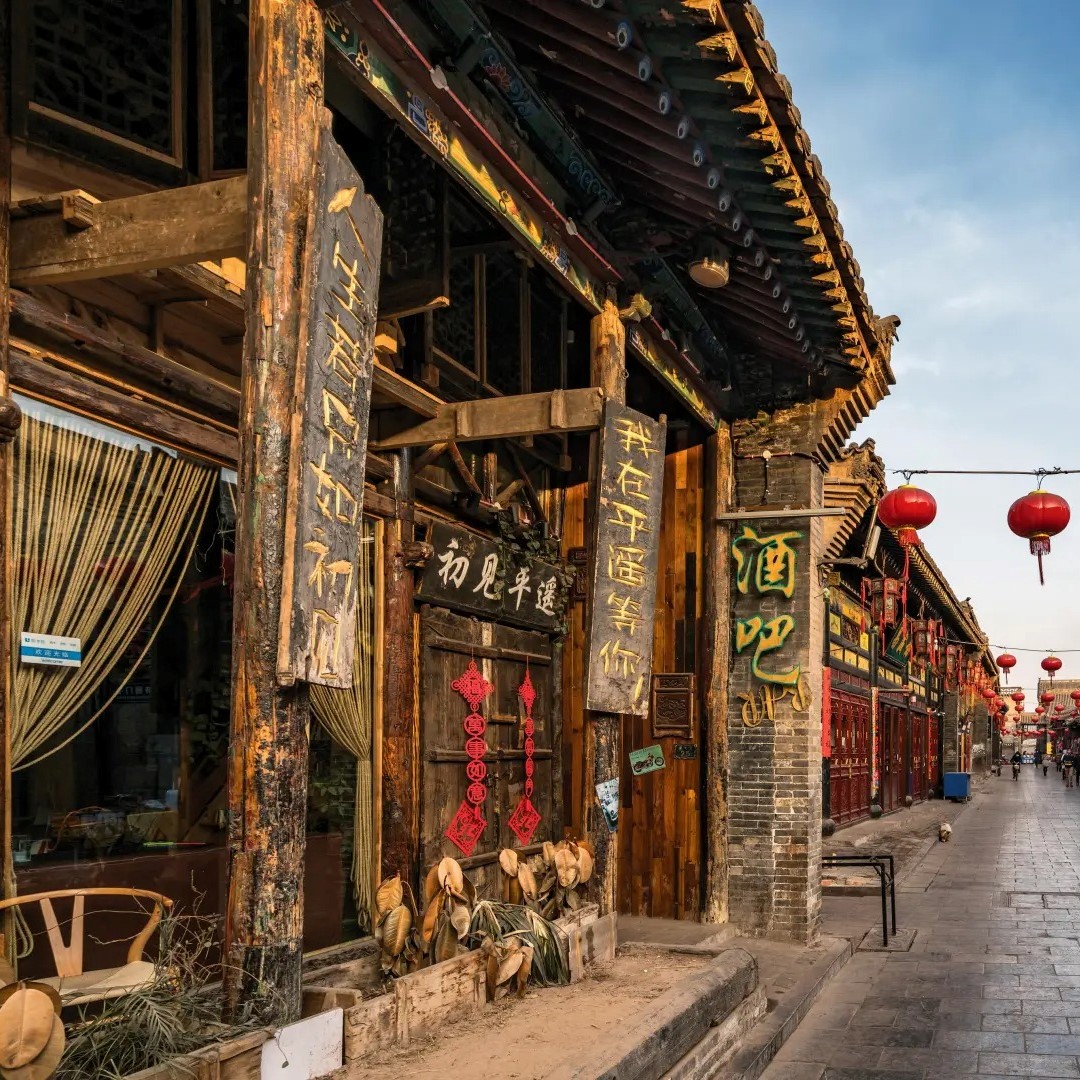
- Evening: Check in to a converted Qing merchant courtyard mansion inside the old city, then walk the lantern-hung Ming-Qing Street as the gates quiet and the souvenir crowds leave.
Day 8 | Pingyao · The Medieval Trading City
- Meals: Breakfast, Lunch, Dinner
- Overnight: Pingyao
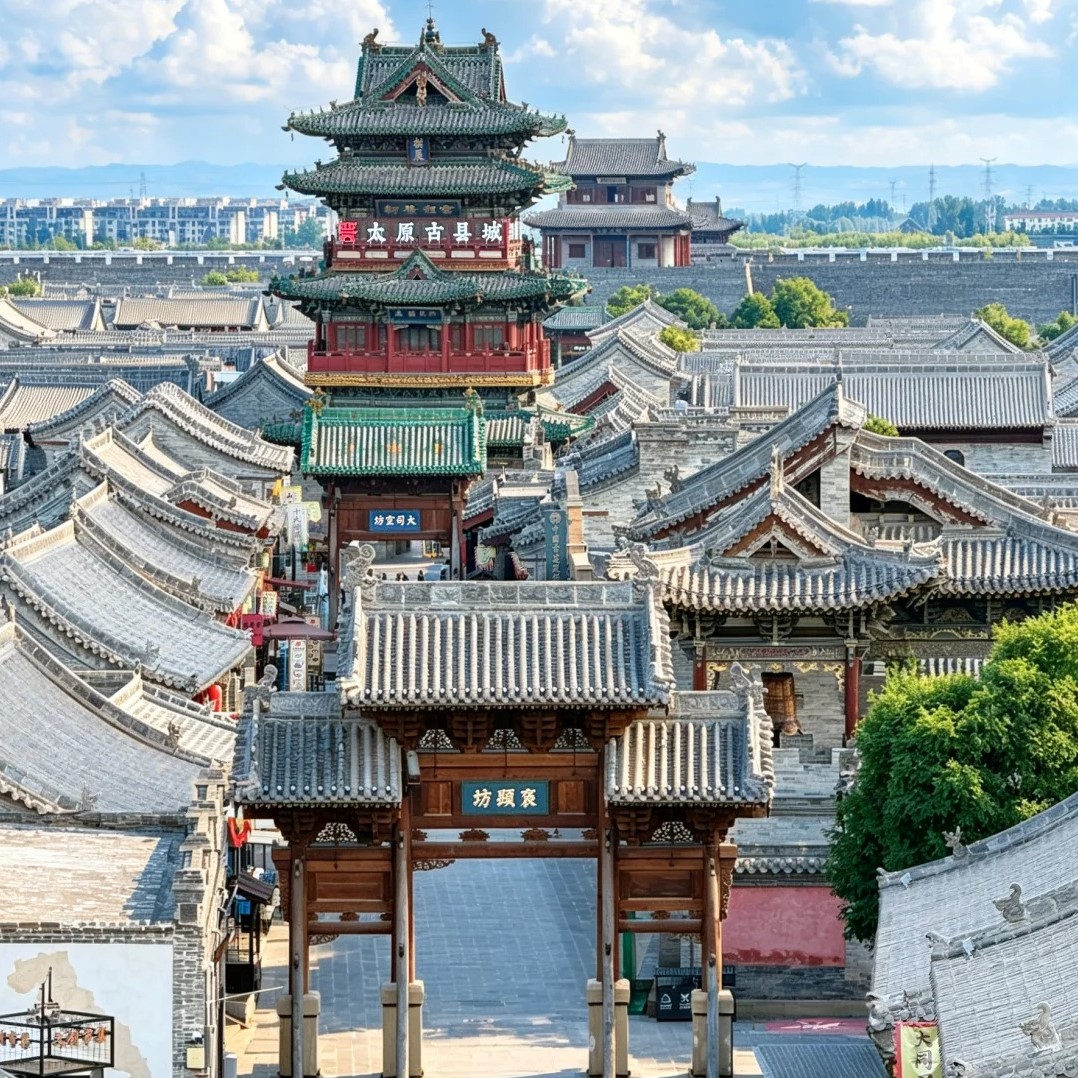
Full day inside the Ancient City of Ping Yao, a UNESCO World Heritage Site and China's best-preserved walled Han Chinese city. Walk or take an electric cart along the 6-kilometer city wall for rooftop views over grey-tiled courtyards; visit Rishengchang, the "draft bank" born here in 1823 that ran China's first nationwide remittance network; the old County Government Office with its halls and cells; the Confucian Temple and City God Temple; and the merchant-family museums.
- Lunch: Pingyao specialties — hand-cut Pingyao beef, oat-lattice noodles (kaolaolao) and aged Shanxi vinegar.
- Afternoon: Optional extension to the Wang Family Courtyard (about 1 hour away), a hillside fortress-mansion of 123 courtyards and over 1,000 rooms known as the "Forbidden City of folk dwellings"; otherwise enjoy tea on a courtyard rooftop and free time for paper-cutting and woodblock-print workshops.
- Evening: Farewell dinner in a candle-lit courtyard, with optional local shadow-puppet or folk tune performance.
Day 9 | Pingyao → Taiyuan · Departure
- Meals: Breakfast
- Morning: A last quiet walk on the wall at dawn or a quick visit to Zhenguo Temple (the third component of the UNESCO property, with rare 10th-century timber hall and sculptures) if your schedule allows.
- Transfer by private car to Taiyuan Wusu International Airport (about 1.5 hours), or take the short high-speed train from Pingyao to Taiyuan South (roughly 30–40 minutes) for your onward flight.We recommend a flight after 14:00; please share your flight or train details when booking.
From floating Buddhas in a hidden mountain hall to lanterns glowing over a 600-year-old merchant street, this is ancient China at its most artful, intimate and unforgettable.
What's Included
- Private air-conditioned business-class vehicle with an experienced long-distance driver for the entire Datong–Yixian–Taiyuan–Xixian–Pingyao route, including airport/train transfers
- Dedicated English-speaking guide, with specialist cave/temple escorts at Yungang and the sculpture halls
- 8 nights' accommodation: 2 nights in a 5-star Datong hotel, 1 night at the best-available hotel in Yixian, 2 nights in a 5-star Taiyuan hotel, 1 night at the best-available comfort hotel in Xixian, and 2 nights in a heritage courtyard inn inside Pingyao (daily breakfast included)
- All entrance tickets, reservations and in-park shuttles: Yungang Grottoes, Shanhua and Huayan Temples, the Hanging Temple, the Western Qing Tombs, Jinci Temple, Shanxi Museum, Xiaoxitian (Thousand-Buddha Nunnery), Shuanglin Temple and the Pingyao heritage pass (city wall, Rishengchang, County Government and the listed city museums)
- Selected meals: 8 breakfasts, 7 lunches and 5 dinners, featuring Shanxi knife-shaved and hand-pulled noodles, copper-pot hot pot, Pingyao beef, aged-vinegar dishes and mountain farmhouse cooking
- Bottled water in the vehicle and 24/7 on-trip assistance
- No shopping stops — a pure, privately escorted art, architecture and history journey
What to Know
- Route & pacing: This is a comprehensive one-way north-to-south journey, arriving in Datong and departing from Taiyuan (after the final night in Pingyao), so there is no backtracking. Because Yixian lies east in Hebei and Xixian lies in the remote southern hills, two days include longer transfers (roughly 3.5 hours on Day 3 and about 5 hours on Day 4); we use a spacious vehicle with frequent breaks and time the sightseeing around them. Travelers preferring a shorter loop confined to Shanxi can omit the Western Qing Tombs leg.
- Reservations & Mondays: Yungang and Xiaoxitian require advance real-name, time-slot reservations (Xiaoxitian limits concurrent visitors and books up, especially since Black Myth: Wukong); Shanxi Museum is closed on most Mondays. We book everything using your passport details; carry your passport every day. At Xiaoxitian, guides are arranged at the visitor center rather than inside the temple, and the sculpture hall has no artificial lighting, so afternoon entry is timed carefully.
- UNESCO listings: Yungang Grottoes (2001), the Ancient City of Ping Yao including Shuanglin and Zhenguo Temples (1997), and the Western Qing Tombs as part of the Imperial Tombs of the Ming and Qing Dynasties (2000) are UNESCO World Heritage Sites. The Hanging Temple, Jinci and Xiaoxitian are protected national treasures but are not UNESCO-inscribed.
- Best seasons: May–June and September–October are ideal — warm, dry and clear with low humidity. July–August is hot on the plains with occasional rain; November–March is cold (well below freezing at night in the north) but quiet and atmospheric. Bring layers for mountain passes and unheated ancient halls.
- Walking level: Active to moderate. Expect extensive walking, uneven stone and earthen paths, cliffside galleries with low railings at the Hanging Temple (not advised for a strong fear of heights), and steps at the tombs, Jinci, Xiaoxitian and Pingyao wall. Comfortable non-slip shoes are essential; the pace and climbs can be softened on request.
- Food & drink: Shanxi cuisine is wheat- and vinegar-based rather than fiery — noodles in endless forms, savory oat preparations, braised Pingyao beef and lamb hot pot. It suits most Western palates; mild, vegetarian and gluten-conscious meals can be arranged with notice.
- Remote nights & hotels: Yixian and especially Xixian are small county towns with limited international-standard inventory; we use the best-available comfortable hotels there, while Datong, Taiyuan and Pingyao offer genuinely premium and characterful stays. The Pingyao courtyard inns are historic buildings with some low doorways and traditional heated-bed rooms.
- Photography: Outdoor and old-city photography is superb, but photography is restricted inside Yungang caves and the Xiaoxitian sculpture hall to protect the antiquities; flash is never permitted in museum galleries. Please respect posted rules and the no-touch policy at all heritage sites.