
Simao-Jingmaiguzhai
4-Day Ancient Tea Mountains of Pu'er Tour: Simao & the Jingmai World Heritage Tea Villages
Designed for American Travelers · Premium City Hotels & Heritage Tea-Village Guesthouses · Meals Included · Private Transportation · Dedicated English-Speaking Guide
Travel to the birthplace of tea. In 2023, the old tea forests of Jingmai Mountain became the world's first tea-themed UNESCO World Heritage Site — a living 1,800-year-old landscape where ancient tea trees grow beneath the rainforest canopy, tended for generations by Bulang and Dai families. Sip fire-roasted tea in a wooden stilt house, wake above a sea of clouds, meet red pandas in a primeval forest, and taste why Pu'er has shaped tea culture around the world.
Tour Highlights
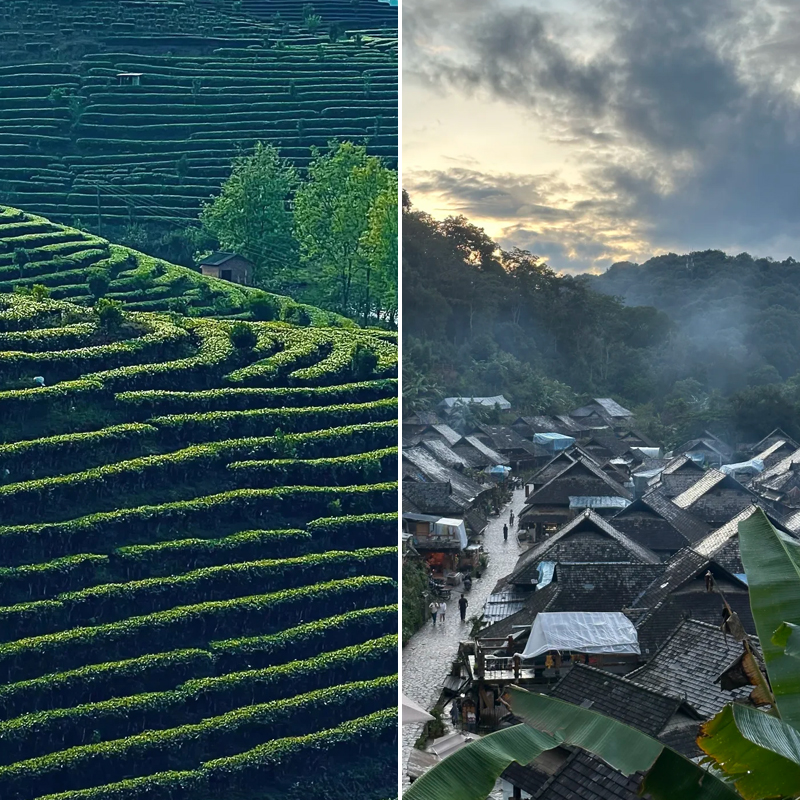
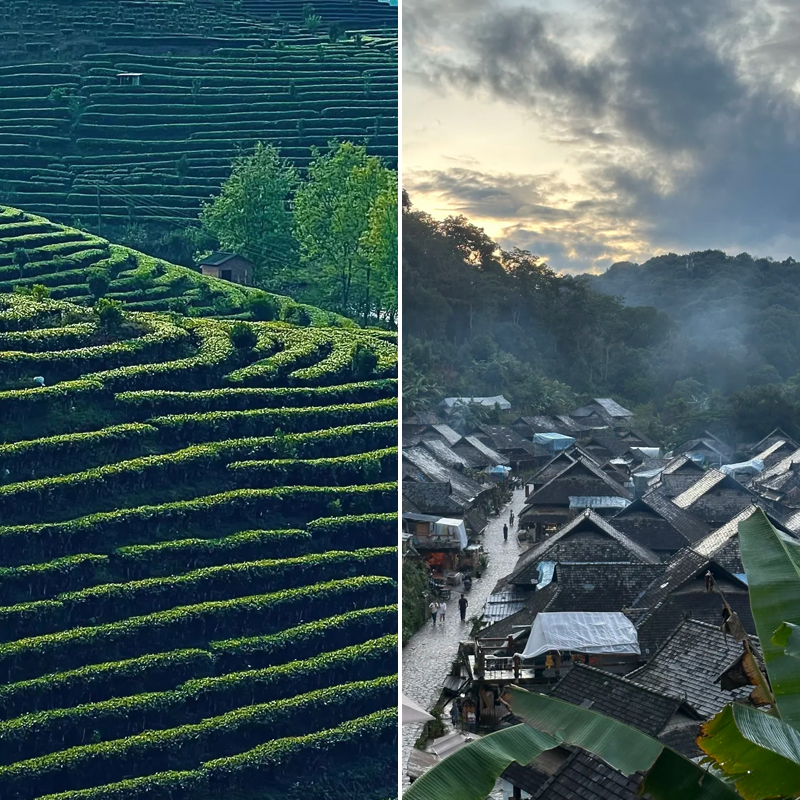
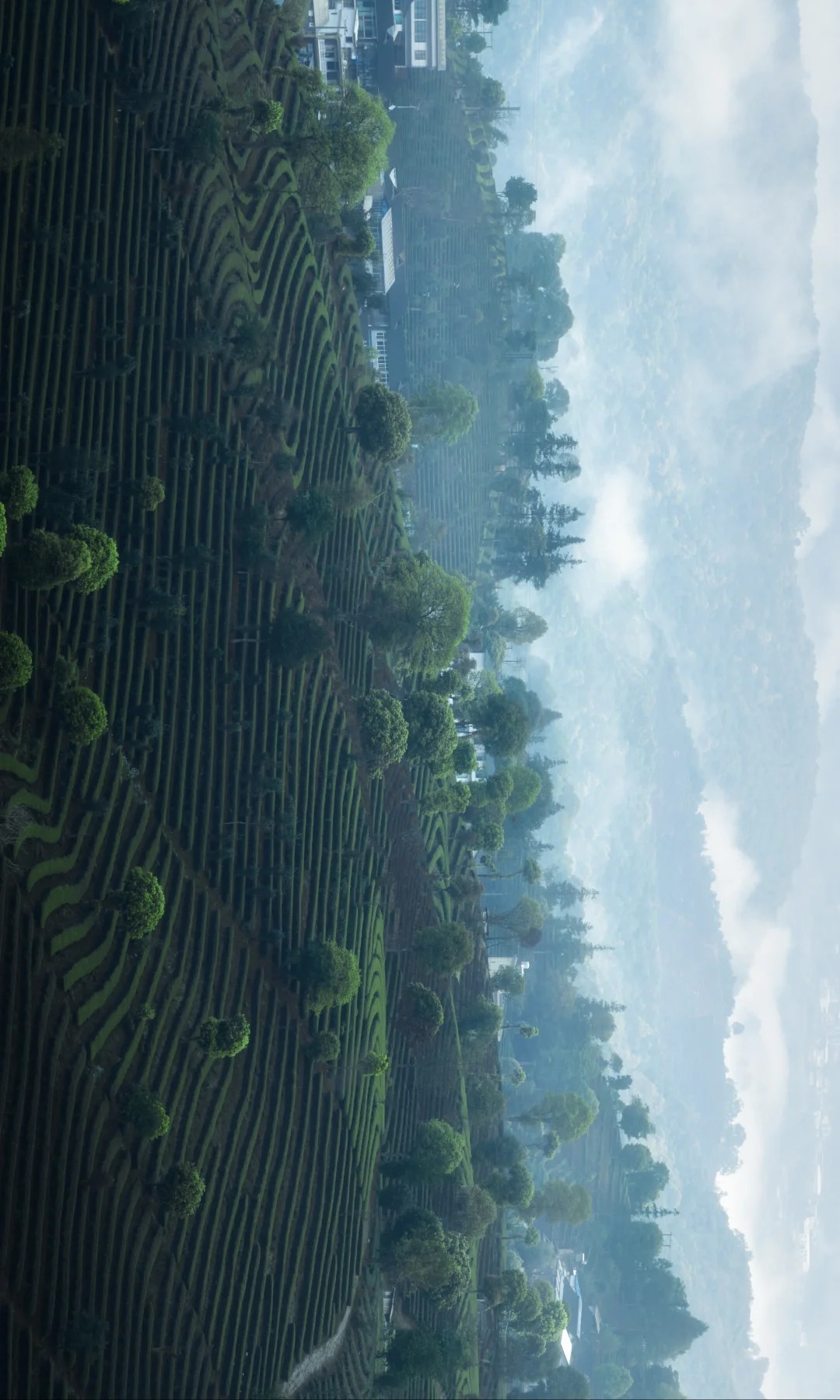
- The World's First Tea-Themed UNESCO World Heritage Site Walk the Cultural Landscape of the Old Tea Forests of Jingmai Mountain in Pu'er (inscribed 2023) — the largest ancient cultivated tea forest on Earth, where centuries-old tea trees grow in a unique "forest-within-a-forest" ecosystem beside traditional villages, spirit altars and ancient banyans.
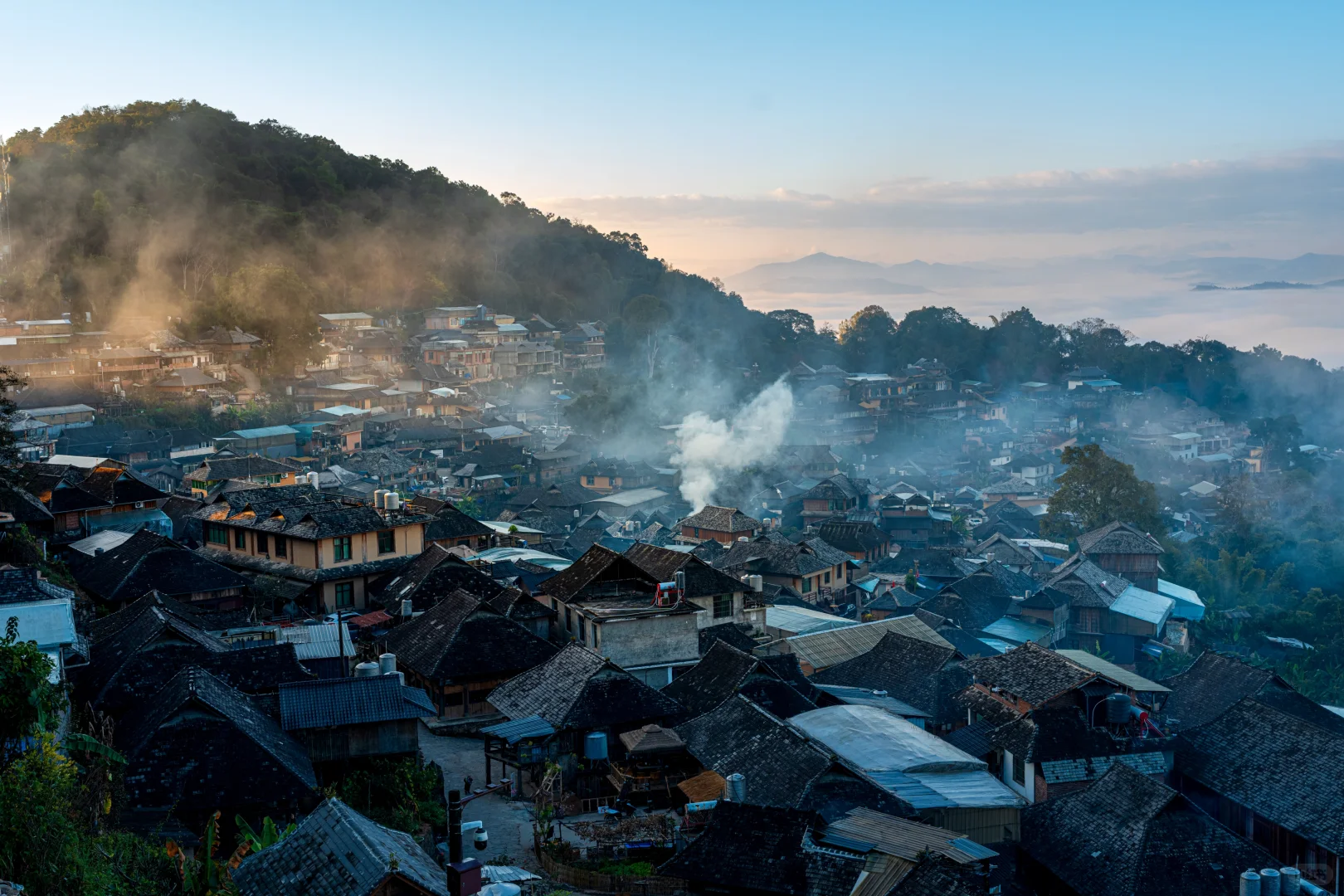
- A Sea of Clouds at Sunrise Rise before dawn to watch mist flood the valleys between the tea hills, leaving village rooftops and ancient trees floating above the clouds — an ink-wash painting come to life, most reliable from late autumn through spring.
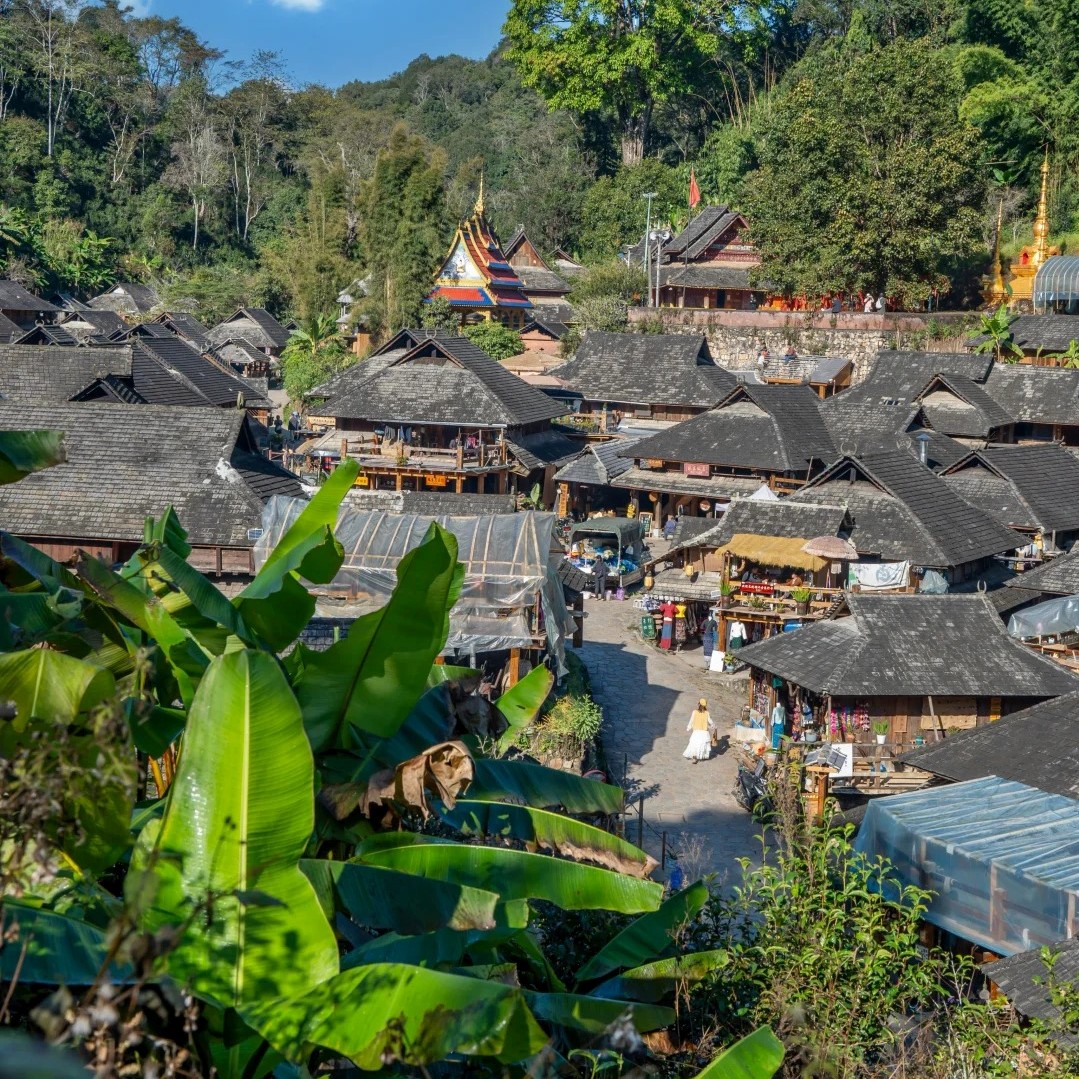
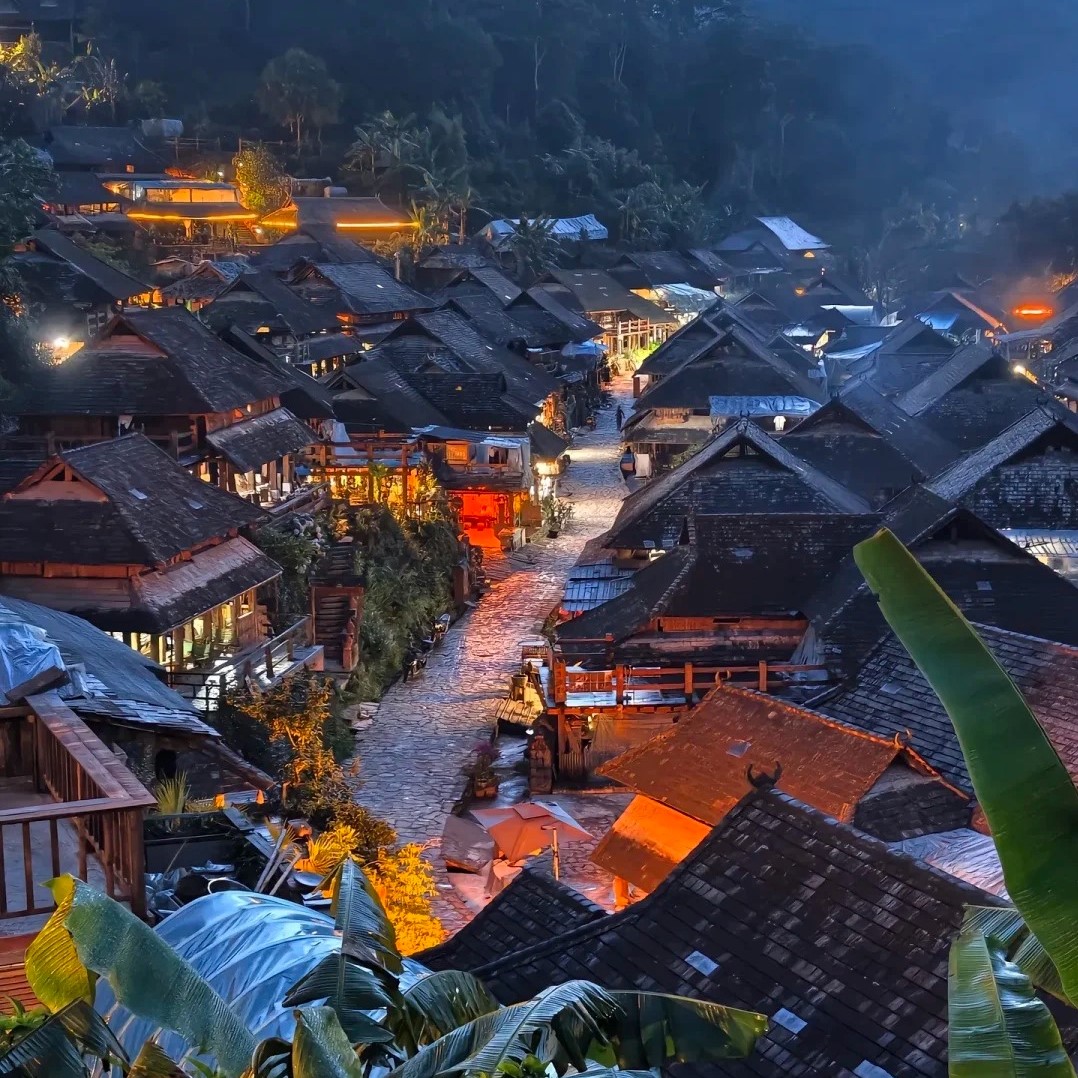
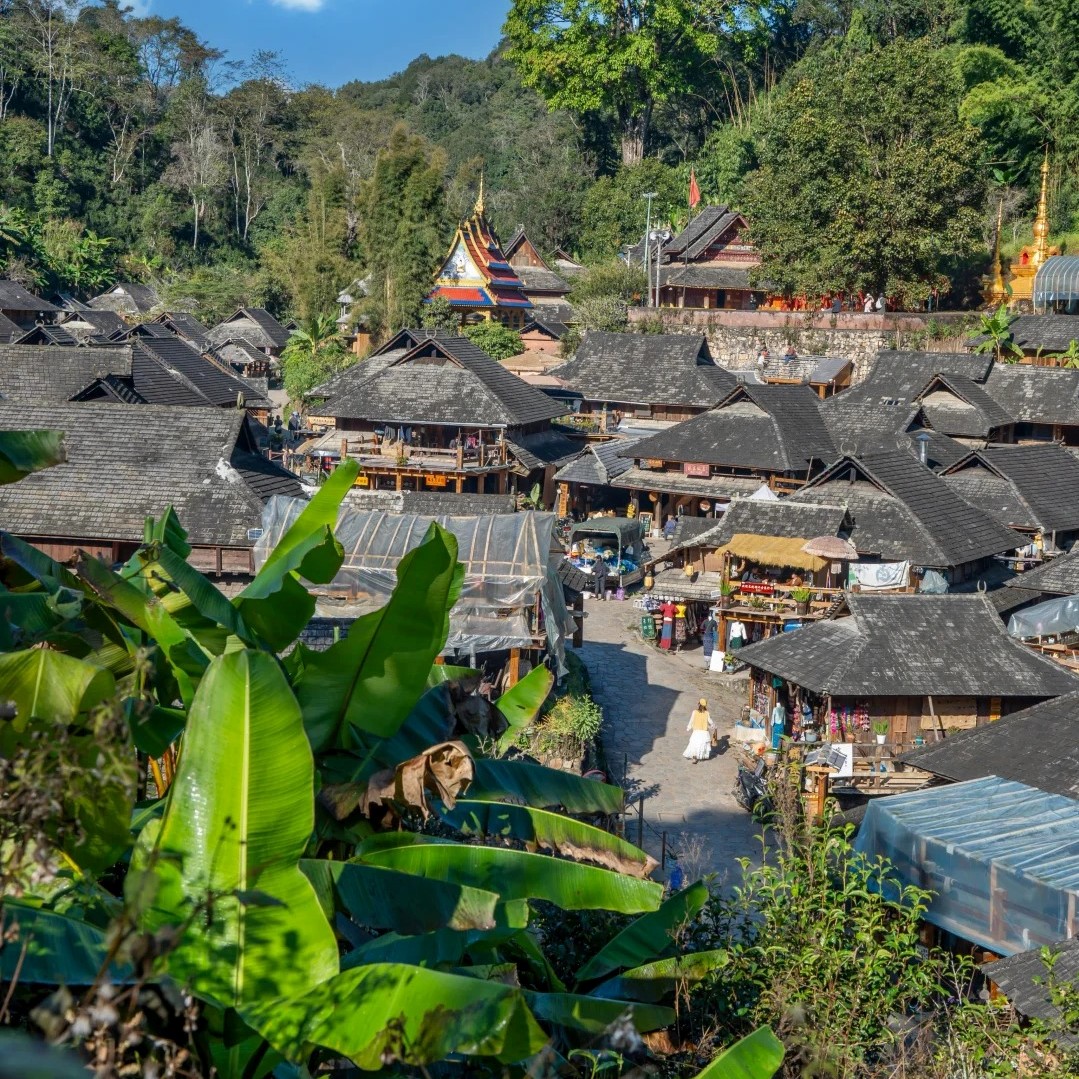
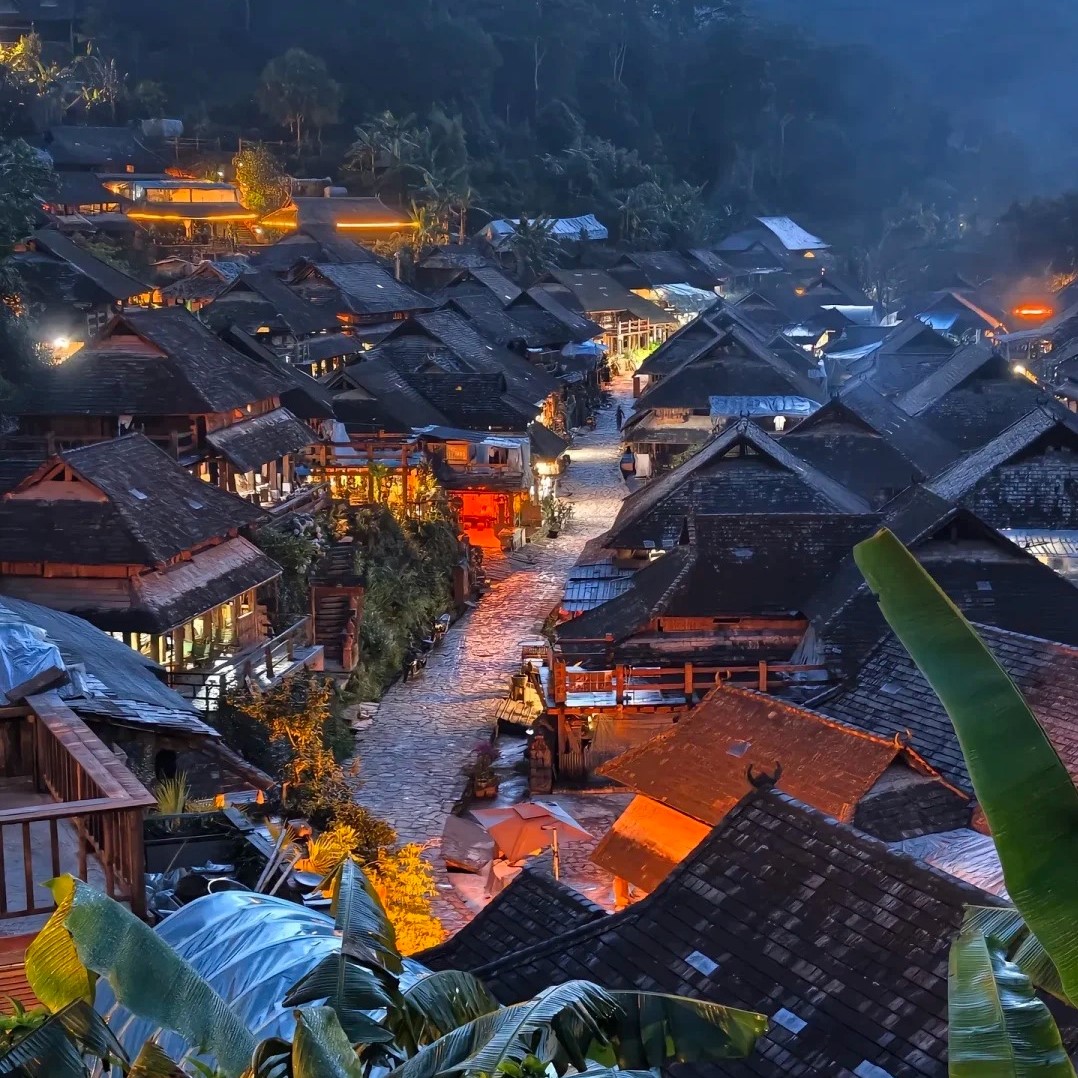
- Two Living Millennium Villages — Wengji & Nuogan Explore mossy stone lanes and grey-tiled wooden stilt houses in Wengji, the thousand-year-old Bulang village with its hilltop temple and golden sunsets, and tranquil Nuogan, the Dai village "where time stands still" and setting of the hit film Coffee or Tea?.
- From Tea Leaf to Tea Cake — A Hands-On Tea Journey Pick fresh leaves with a farmer in an ancient tea garden, roast them over an open fire the traditional Bulang way, and press your own souvenir Pu'er tea cake to take home. Taste fire-pit roasted tea in a family home, with no shop and no sales pitch.
- Red Pandas, Rhinos & Rainforest, Plus a Coffee Estate At Sun River National Park, walk boardwalks through primeval subtropical forest for one of China's rare close-up encounters with red pandas and relocated rhinos, then visit a family-run coffee estate in the hills that produce both Pu'er tea and award-winning Yunnan coffee.
- Exceptional Value, All-Inclusive Premium Tour Your package covers all private ground transportation, hand-selected hotels and heritage guesthouses, an expert English-speaking guide, entrance fees, tea and coffee experiences, and daily breakfast plus selected local meals — no shopping stops, ever.
Day-by-Day Itinerary
Day 1 | Arrival in Pu'er (Simao) · The Old Tea-Horse Road
- Meals: Dinner
- Overnight: Simao (Pu'er City), premium boutique hotel
Full day: Private pickup at Pu'er Simao Airport or Pu'er High-Speed Railway Station and transfer to your hotel in Simao, the leafy capital of Pu'er Prefecture and the historic starting point of the Tea-Horse Road. Arrive at your own pace and breathe the cool, tea-scented highland air (about 1,300 m / 4,265 ft).
- Afternoon: Drive to Nakeli Tea-Horse Post Station, a beautifully preserved caravan stop on the ancient route by which Pu'er tea once traveled on horseback to Tibet and Southeast Asia. Cross the covered Wind-and-Rain Bridge, see the old horse shops and stone caravan tracks, and try a Pu'er tea latte and flower pastries in a courtyard café.
- Evening: Wander the lantern-lit Tea-Horse Ancient Town night market, where old stone lanes fill with Yunnan snacks — copper-pot rice noodles, roasted rushan cheese and Wa-style chicken rice porridge.
Day 2 | Sun River Rainforest · Red Pandas, Rhinos & a Coffee Estate
- Meals: Breakfast, Lunch
- Overnight: Simao (Pu'er City)
- Morning: Spend the morning in Sun River National Park, a vast subtropical rainforest reserve. About 1 hour from the city. Walk easy forest boardwalks with your naturalist guide to meet the park's beloved red pandas at their most active (mid-morning is best), see the southern white rhinos in the wildlife rescue zone, and spot gibbons, hornbills and giant ferns among ancient trees.
- Lunch: A farm-to-table forest meal of local mushrooms, free-range chicken and seasonal greens.
- Afternoon: Visit a family-run coffee estate near Xiao'aozi Village, set on roughly 30 hectares of hillside. Follow coffee from seed to cup — walk the rows, watch the roasting, and taste light and dark roasts side by side. Few visitors realize this corner of Yunnan grows some of China's most prized specialty coffee.
- Evening: Return to Simao for a relaxed evening and an early night before the drive into the tea mountains.


Day 3 | Into Jingmai Mountain · Nuogan Dai Village & Wengji Bulang Village
- Meals: Breakfast, Lunch, Dinner
- Overnight: A hand-selected heritage guesthouse in Wengji or Manghong, in a converted traditional wooden house with tea-hill views
- Morning: Depart by private vehicle for Jingmai Mountain, about 200 km away. Approx. 3.5–4 hours including a rest stop. The route crosses tea country and climbs into forested hills on the Myanmar borderlands; the final mountain section is winding and scenic. En route, stop at the China Pu'er Tea Expo Garden to see vast demonstration tea terraces and learn how Pu'er tea is planted, withered, fermented and aged into the cakes aged for decades by connoisseurs.
- Afternoon: Arrive at Nuogan Ancient Village, a thousand-year-old Dai settlement of bamboo-and-timber stilt houses reflected in terraced paddies — the "village where time stands still" and a filming location of the movie Coffee or Tea?. Climb to the viewpoint above the village temple for a panorama of rooftops, tea hills and forest.
- Golden hour: Visit Wengji Ancient Village, the soul of Jingmai and a thousand-year-old Bulang settlement. Weathered wooden houses, mossy stone steps and an ancient Buddhist temple at the gate frame one of Yunnan's great sunset views over a sea of clouds. Join a Bulang family for fire-pit roasted tea and a farmhouse dinner of tea-scented chicken, tea-leaf scrambled eggs and hand-grab rice.
Day 4 | Cloud-Sea Sunrise · The Ancient Tea Forest & Farewell
- Meals: Breakfast, Lunch
- Before dawn: Make the short transfer to the Octagonal Tower (Bajiao Ting) or Jingmai Dazhai viewing platform for the celebrated sunrise over the sea of clouds, as morning mist rolls through the valleys and the first light gilds the tea forests.Seasonal; clearest from October to April.
- Morning: Walk with a local tea farmer into the Millennium Ancient Tea Forest, the heart of the World Heritage Site. See gnarled tea trees many centuries old growing beneath towering rainforest trees — the ingenious "tea under the forest" system that needs no pesticides. Pick fresh leaves, then roast and press your own Pu'er tea cake, stamped to take home as a keepsake. Continue to Mangjing Village to see the dramatic Queen Bee Tree, a nearly 50-meter banyan hung with dozens of wild beehives sacred to the Bulang, and the arch-shaped Princess Banyan, its hollow trunk forming a natural doorway.
- Late morning: A final Bulang lunch of lemongrass-grilled fish, bamboo-tube rice and wild vegetables, then drive back to Simao. Approx. 3.5–4 hours. Arrive in Pu'er in the late afternoon for an evening flight or high-speed train; we recommend adding one extra night if you prefer an unhurried departure.
In these mountains, tea is not a drink but a way of life — planted by ancestors, protected as sacred, and shared with every guest. You will leave with a tea cake, the fragrance of woodsmoke and roasted leaves, and the memory of villages floating above the clouds.

What's Included
- Private air-conditioned vehicle with an experienced local driver for the entire trip (Simao round-trip), including the scenic Jingmai Mountain road
- Dedicated English-speaking guide, with a local Bulang/Dai tea farmer joining in Jingmai
- 3 nights' accommodation: 2 nights in a premium Simao boutique hotel and 1 night in a hand-picked heritage tea-village guesthouse (daily breakfast included)
- All entrance tickets and activities: Nakeli Tea-Horse Post, Sun River National Park (including shuttle), the coffee estate tasting, China Pu'er Tea Expo Garden, and the Jingmai ancient tea forest tea-picking, roasting and tea-cake pressing experience
- Selected meals: 3 breakfasts, 3 lunches and 2 dinners, featuring tea-scented chicken, Bulang farmhouse cooking, Dai lemongrass-grilled fish, bamboo-tube rice and Yunnan coffee
- Bottled water in the vehicle and 24/7 on-trip assistance
- No shopping stops — a pure, privately escorted nature, tea and culture experience
What to Know
- Start & end: Pu'er (Simao), southern Yunnan. Pu'er Simao Airport has direct flights from Kunming, Chengdu, Chongqing and Guangzhou; high-speed trains on the Kunming–Vientiane railway link Kunming to Pu'er in roughly 2.5–3 hours. The tour can also be arranged one-way from Simao to Xishuangbanna (Jinghong) on request, instead of returning to Simao.
- Best seasons: Late October to April for the most reliable sea-of-clouds sunrises and comfortable, dry, sunny days; July–August is lush and green but rainier. The mountain sits around 1,400–1,600 m (4,600–5,250 ft) with mild days and cool nights — bring a light jacket, and a warm layer for the pre-dawn sunrise.
- Road conditions: The drive to Jingmai takes about 3.5–4 hours each way, and the last section is a winding mountain road (partly loose surface). Please take motion-sickness medication if needed; we use an experienced mountain driver and a comfortable SUV or business van.
- Walking level: Easy to moderate. Forest-park and tea-village walks are short and on stone paths or boardwalks with steps; surfaces can be damp and slippery in rain, so wear closed non-slip walking shoes. Sunscreen, sunglasses and a hat are advisable — UV is strong at this altitude.
- Heritage etiquette: The tea forests and villages are living World Heritage communities. Keep to paths in the ancient tea forest, do not pick leaves without your farmer guide, ask before photographing residents, and speak quietly around temples and during sunrise viewing.
- Food: Yunnan and Dai cooking is generally milder and more herb-driven than Sichuan food, with lemongrass, lime, mint and wild vegetables; fully non-spicy and vegetarian meals are easily arranged — just let your guide know.